Summary

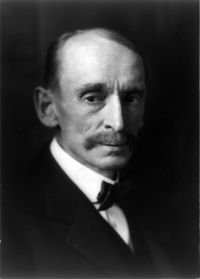
Portrait of William R. Day William R. Day United States v. Butler County Railroad Company…

The Great Western Land Company furnishes timber to several independent industries on the tracks of the tap line near Linstead, the tap line switching their product to the trunk lines. Their factory sites are leased from the cooperage company, the purpose of making such leases being to secure traffic upon which the tap line might obtain divisions. A few independent producers on the main track of the tap line team their supplies and ship their products over the tap line.
Source: Wikisource

Portrait of William R. Day William R. Day United States v. Butler County Railroad Company…

The Commission found that the sugar company, having refineries at New Orleans and New York, so adjusted the rates to such places as to induce movements to them and restrict movements to other points, and limited the amount the tap line might receive on proprietary traffic moved from the mill to the Iron Mountain and Frisco to a switching charge fixed at $1.50 per car.
Source: Wikisource

Portrait of William R. Day William R. Day United States v. Butler County Railroad Company…

The regular manufacturing rate under the Missouri distance tariff is charged the cooperage company by the tap line, 1 to 1 1/2 c. per 100 pounds, approximately $4 per car. The loaded cars are switched to the Frisco or Iron Mountain, less than 1 mile, and the appellee receives from them an allowance of from 2 to 5c. per 100 pounds. The rates from tap line points, including the mill at Linstead, are in all cases 2c.
Source: Wikisource

Get perspective with Kwize: daily news enlightened by great literature