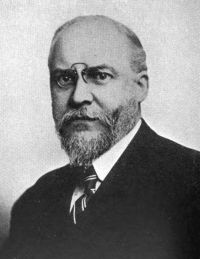
William Raimond Baird

William Raimond Baird

Summary

Portrait of William Raimond Baird William Raimond Baird 1911 Encyclopædia Britannica, Volume 11… (1911)

At Harvard, although there are chapters of a few of the fraternities, their influence is insignificant, their place being taken by a group of local societies, some of them class organizations. At Yale, the regular system of fraternities obtains in the engineering or technical department (the Sheffield Scientific School) , but in the classical department the fraternity chapters are called “junior” societies, because they limit their membership to the three upper classes and allow the juniors each year practically to control the chapter affairs.
Source: Wikisource

Portrait of William Raimond Baird William Raimond Baird 1911 Encyclopædia Britannica, Volume 11… (1911)

All the fraternities aim to be select and to pick their members from the mass of incoming students. Where, however, the material to select from is not abundant and the rival fraternities are numerous, care in selection is impossible, and the chapters at any one college are apt to secure much the same general type of men. Many of the fraternities have, however, on account of a persistent selection of men of about the same tastes at different colleges, acquired a distinct character and individuality
Source: Wikisource

Portrait of William Raimond Baird William Raimond Baird 1911 Encyclopædia Britannica, Volume 11… (1911)

Members join in the impressionable years of their youth; they retain for their organizations a peculiar loyalty and affection, and freely contribute with money and influence to their advancement.
Almost universally the members of any particular chapter (or part of them) live together in a lodge or chapter house. The men’s fraternities own hundreds of houses and rent as many more. The fraternities form a little aristocracy within the college community.
Source: Wikisource

Get perspective with Kwize: daily news enlightened by great literature