Summary

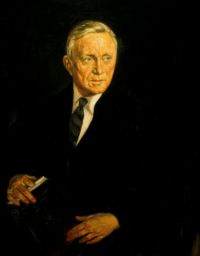
Portrait of William O. Douglas William O. Douglas Elfbrandt v. Russell (384 U.S. 11…

Would it be legal to join a seminar group predominantly Communist and therefore subject to control by those who are said to believe in the overthrow of the Government by force and violence? Juries might convict though the teacher did not subscribe to the wrongful aims of the organization. And there is apparently no machinery provided for getting clearance in advance. [5]
Those who join an organization but do not share its unlawful purposes and who do not participate in its unlawful activities surely pose no threat, either as citizens or as public employees.
Source: Wikisource

Portrait of William O. Douglas William O. Douglas Elfbrandt v. Russell (384 U.S. 11…

Nothing in the oath, the statutory gloss, or the construction of the oath and statutes given by the Arizona Supreme Court, purports to exclude association by one who does not subscribe to the organization's unlawful ends. Here as in Baggett v. Bullitt, supra, the 'hazard of being prosecuted for knowing but guiltless behavior' (id., 377 U.S. at 373, 84 S.Ct. at 1323) is a reality. People often label as 'communist' ideas which they oppose; and they often make up our juries.
Source: Wikisource

Portrait of William O. Douglas William O. Douglas Elfbrandt v. Russell (384 U.S. 11…

Any lingering doubt that proscription of mere knowing membership, without any showing of 'specific intent,' would run afoul of the Constitution was set at rest by our decision in Aptheker v. Secretary of State, 378 U.S. 500, 84 S.Ct. 1659, 12 L.Ed.2d 992. We dealt there with a statute which provided that no member of a Communist organization ordered by the Subversive Activities Control Board to register shall apply for or use a passport. We concluded that the statute would not permit a narrow reading of the sort we gave § 2385 in Scales.
Source: Wikisource

Get perspective with Kwize: daily news enlightened by great literature