Summary

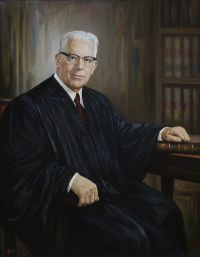
Portrait of Earl Warren Earl Warren United States v. Robel — Opinion of the Court

Yet, this concept of 'national defense' cannot be deemed an end in itself, justifying any exercise of legislative power designed to promote such a goal. Implicit in the term 'national defense' is the notion of defending those values and ideals which set this Nation apart. For almost two centuries, our country has taken singular pride in the democratic ideals enshrined in its Constitution, and the most cherished of those ideals have found expression in the First Amendment.
Source: Wikisource

Portrait of Earl Warren Earl Warren United States v. Robel — Opinion of the Court

We are not unmindful of the congressional concern over the danger of sabotage and espionage in national defense industries, and nothing we hold today should be read to deny Congress the power under narrowly drawn legislation to keep from sensitive positions in defense facilities those who would use their positions to disrupt the Nation's production facilities. We have recognized that, while the Constitution protects against invasions of individual rights, it does not withdraw from the Government the power to safeguard its vital interests.
Source: Wikisource

Portrait of Earl Warren Earl Warren United States v. Robel — Opinion of the Court

We are concerned solely with determining whether the statute before us has exceeded the bounds imposed by the Constitution when First Amendment rights are at stake. The task of writing legislation which will stay within those bounds has been committed to Congress. Our decision today simply recognizes that, when legitimate legislative concerns are expressed in a statute which imposes a substantial burden on protected First Amendment activities, Congress must achieve its goal by means which have a 'less drastic' impact on the continued vitality of First Amendment freedoms.
Source: Wikisource

Get perspective with Kwize: daily news enlightened by great literature