Summary

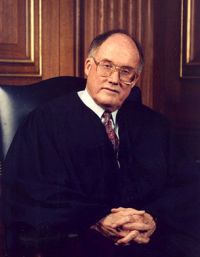
Portrait of William Rehnquist William Rehnquist Barnes v. Glen Theatre Inc. — Opinion of the Court

The perceived evil that Indiana seeks to address is not erotic dancing, but public nudity. The appearance of people of all shapes, sizes and ages in the nude at a beach, for example, would convey little if any erotic message, yet the state still seeks to prevent it. Public nudity is the evil the state seeks to prevent, whether or not it is combined with expressive activity.
Source: Wikisource

Portrait of William Rehnquist William Rehnquist Barnes v. Glen Theatre Inc. — Opinion of the Court

Respondents contend that even though prohibiting nudity in public generally may not be related to suppressing expression, prohibiting the performance of nude dancing is related to expression because the state seeks to prevent its erotic message. Therefore, they reason that the application of the Indiana statute to the nude dancing in this case violates the First Amendment, because it fails the third part of the O'Brien test, viz: the governmental interest must be unrelated to the suppression of free expression.
Source: Wikisource

Get perspective with Kwize: daily news enlightened by great literature