Summary

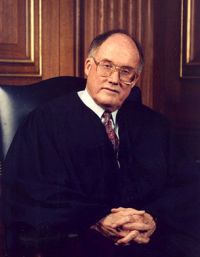
Portrait of William Rehnquist William Rehnquist Collins v. Youngblood — Opinion of the Court (1990)

The Court held that since Utah was a Territory when Thompson's crime was committed, and therefore obligated to provide a 12-person jury by the Sixth Amendment, the Ex Post Facto Clause prevented the State from taking away that substantial right from him when it became a State and was no longer bound by the Sixth Amendment as then interpreted. The right to jury trial provided by the Sixth Amendment is obviously a "substantial" one, but it is not a right that has anything to do with the definition of crimes, defenses, or punishments, which is the concern of the Ex Post Facto Clause.
Source: Wikisource

Portrait of William Rehnquist William Rehnquist Collins v. Youngblood — Opinion of the Court (1990)

It is settled, by decisions of this Court so well known that their citation may be dispensed with, that any statute which punishes as a crime an act previously committed, which was innocent when done; which makes more burdensome the punishment for a crime, after its commission, or which deprives one charged with crime of any defense available according to law at the time when the act was committed, is prohibited as ex post facto.
Source: Wikisource

Get perspective with Kwize: daily news enlightened by great literature