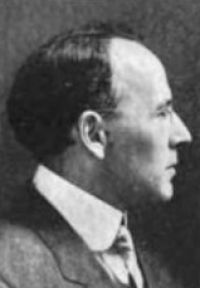
William Scott Ferguson

William Scott Ferguson

Summary

Portrait of William Scott Ferguson William Scott Ferguson The Harvard Classics Vol. 51 (1914)

For two hundred and fifty years sixty millions of people had enjoyed the material blessings of peace and orderly government. They had cut down forests, made the desert a garden, built cities by the hundreds, and created eternal monuments of the sense for justice and magnificence which penetrated from Rome to the ends of the known world. Then they became the helpless prey of a few hundred thousand native and barbarian soldiers. The decline of the Roman Empire is the greatest tragedy in history.
Source: Wikisource

Portrait of William Scott Ferguson William Scott Ferguson The Harvard Classics Vol. 51 (1914)

With the leveling down of the Spartan aristocracy went the decay of the art and letters of which it had been the bearer. The Spartan people became an armed camp living a life of soldierly comradeship and of puritanical austerity, ever solicitous lest its serfs (there were fifteen of them to every Spartan) should revolt and massacre, ever watchful lest the leadership which it had established in Greek affairs (there were 15,000 Spartans and 3,000,000 Greeks) should be imperiled. In Athens the course of development had been directly the opposite of this.
Source: Wikisource

Portrait of William Scott Ferguson William Scott Ferguson The Harvard Classics Vol. 51 (1914)

He was fortunate in his age. "If a man were called to fix the period in the history of the world during which the condition of the human race was most happy and prosperous, he would," says Gibbon, "without hesitation, name that" in which Plutarch wrote. It was the twilight time of antiquity; and in the works of Plutarch [1] are clearly mirrored the charm and languor, the incentive to stroll and loiter, and the dimming of vision, characteristic of the hour before "the sun sank and all the ways were darkened."
Source: Wikisource

Get perspective with Kwize: daily news enlightened by great literature