Summary

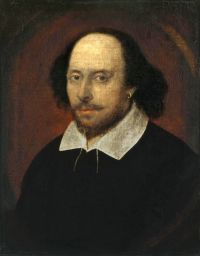
Portrait of William Shakespeare William Shakespeare Timon of Athens (1919) Yale — Appendix C (1919)

The exact circumstances of the writing of Timon of Athens will probably remain conjectural, but that the play is not wholly Shakespeare's creation is certain. Double authorship is constantly proclaimed by singularities of workmanship and by technical problems involving inconsistencies in character and action. Regular and highly irregular verse, rhymed and unrhymed lines, dignified prose and prose that is absurdly flat follow each other in capricious fashion.
Source: Wikisource

Portrait of William Shakespeare William Shakespeare Timon of Athens (1919) Yale — Appendix C (1919)

Reasoning that nine lines of a ten-line prose passage (II. ii. 194-204) are genuine, Wright is enabled to advance the theory that the germane scenes are also Shakespeare's (III. i., and III. ii.) . If these two scenes are spurious, as they have been usually considered, Shakespeare's share of the play has been inadequately motivated. If, on the other hand, these two scenes are from his pen, Shakespeare himself has motivated Timon's misanthropy, and his priority in composition is rendered more likely.
Source: Wikisource

Portrait of William Shakespeare William Shakespeare Timon of Athens (1919) Yale — Appendix C (1919)

It has been customary to regard a few lines at the opening and a few lines at the closing of the Banditti episode as spurious, but it is quite possible that the whole passage is genuine (401-466) . [11] The rest of the scene is probably interpolated (467-545) . [12] The first scene of the fifth act with the possible exception of the introduction (1-59) was written by Shakespeare. [13] The second and fourth scenes are likewise his; only the third scene bears no trace of his workmanship.
Source: Wikisource

Get perspective with Kwize: daily news enlightened by great literature