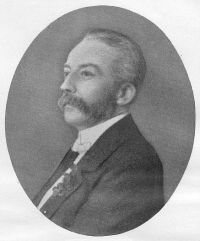
Richard Claverhouse Jebb

Richard Claverhouse Jebb

Summary

Portrait of Richard Claverhouse Jebb Richard Claverhouse Jebb 1911 Encyclopedia Britannica (1911)

The speech of Dikaios Logos in the Clouds, the praises of country life in the Peace, the serenade in the Ecclesiazusae, the songs of the Spartan and Athenian maidens in the Lysistrata, above all, perhaps, the chorus in the Frogs, the beautiful chant of the Initiated,—these passages, and such as these, are the true glories of Aristophanes. They are the strains, not of an artist, but of one who warbles for pure gladness of heart in some place made bright by the presence of a god. Nothing else in Greek poetry has quite this wild sweetness of the woods.
Source: Wikisource

Portrait of Richard Claverhouse Jebb Richard Claverhouse Jebb 1911 Encyclopedia Britannica (1911)

Aristophanes is for us the representative of the Old Comedy. But his genius, while it includes, also transcends the genius of the Old Comedy. He can denounce the frauds of a Cleon, he can vindicate the duty of Athens to herself and to her allies, with a stinging scorn and a force of patriotic indignation which makes the poet almost forgotten in the citizen.
Source: Wikisource

Portrait of Richard Claverhouse Jebb Richard Claverhouse Jebb 1911 Encyclopedia Britannica (1911)

Aristophanes is one of the men for whom opinion is mainly a matter of feeling, not of reason. His imaginative susceptibility gave him a warm and loyal love for the traditional glories of Athens, however dim the past to which they belonged; a horror of what was ugly or ignoble in the present; a keen perception of what was offensive or absurd in pretension. The broad preferences and dislikes thus generated were enough not only to point the moral of comedy, but to make him, in many cases, a really useful censor for the city.
Source: Wikisource

Get perspective with Kwize: daily news enlightened by great literature