Summary

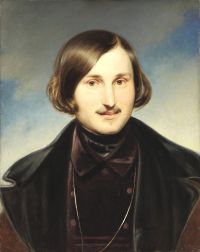
Portrait of Nikolai Gogol Nikolai Gogol,  The Inspector-General — Introduction (1836)

“ The Inspector-General is a faithful reflex of the seamy side of provincial life in Russia, and a typical set of droll but dubious characters live again in its pages. The play is indeed a mirror, and a not too flattering one, to the more shady section of Muscovite society. Apart, however, from the general tone of satire, which would be more keenly appreciated by its victims, there is in the Revizór so much rough-and-ready wit, and such a series of humorous situations, that the comedy appeals also to non-Russian readers. As to plot, there is scarcely any. ”
Source: Wikisource

Portrait of Nikolai Gogol Nikolai Gogol,  The Inspector-General — Introduction (1836)

“ Cannot the character of Khlestakov be divined from his part ? Have I in my self-conceit so lamentably failed to give indications for the actor's guidance? Yet I thought it was clear enough. Khlestakov is not an intentional impostor, or a liar by profession; he forgets that he is telling falsehoods, and almost believes what he is saying. His spirits rise, as he finds he is a success he becomes expansive, poetic, inspired. How much of that, pray, was expressed ? Why, not a bit of recognisable individuality did poor Khlestakov exhibit. ”
Source: Wikisource

Portrait of Nikolai Gogol Nikolai Gogol,  The Inspector-General — Introduction (1836)

“ The Inspector-General, like Dead Souls, is now firmly established as a Russian classic. An enthusiastic critic, Dudishkin, has gone so far as to lay down his opinion that "Russia possesses only one comedy—The Revizor—which quite fulfils the requirements of dramatic art." Representations of the play are given from time to time, especially at the Alexandrovski Theatre at St. Petersburg. Jubilee celebrations were held in 1886 in the two capitals. Matters were different, however, fifty years earlier. ”
Source: Wikisource

Get perspective with Kwize: daily news enlightened by great literature