Mikhail Gogol

Definition and stakes

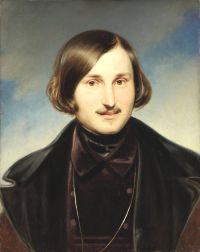
Portrait of Nikolai Gogol Nikolai Gogol Dead Souls—A Poem (1922)

Selifan brandished the whip and kept shouting, 'Ech! ech! ech!' smoothly rising up and down on the box, as the three horses darted up or flew like the wind down the little hills which dotted the high-road that sloped scarcely perceptibly down hill. Tchitchikov merely smiled as he lightly swayed on his leather cushion, for he loved rapid driving. And what Russian does not love rapid driving? How should his soul that craves to be lost in a whirl, to carouse without stint, to say at times, 'Damnation take it all!'—how should his soul not love it?
Source: Wikisource

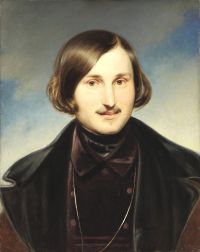
Portrait of Nikolai Gogol Nikolai Gogol Dead Souls—A Poem (1922)

One must start from the beginning and not from the middle. If any one were to say to me: "Give me a hundred thousand and I'll get rich directly," I shouldn't believe him: he is counting on luck and not on a certainty. One must begin with a farthing.'
'In that case I shall get rich,' said Tchitchikov, 'because I am beginning almost, so to say, from nothing.' He meant, of course, his dead souls.
'Konstantin, it is time for Pavel Ivanovitch to rest and sleep,' said his wife, 'and you keep chattering.'
'And you will certainly get rich,' said Skudronzhoglo, not heeding his wife.
Source: Wikisource

Portrait of Nikolai Gogol Nikolai Gogol Dead Souls—A Poem (1922)

You are haggling, tell me your real price.'
'I cannot give more, Mihail Semyonovitch; you may believe my word, I cannot; what cannot be done, cannot be done,' said Tchitchikov; he added half a rouble, however.
'But why are you so stingy?' said Sobakevitch; 'it really is not dear! Another man would cheat you and sell you some rubbish instead of souls; but mine are as sound as a nut, all first-class: if not craftsmen, they are sturdy peasants of one sort or another. Look here, Miheyev the wheelwright, for instance, he never made a carriage that wasn't on springs.
Source: Wikisource

Get perspective with Kwize: daily news enlightened by great literature