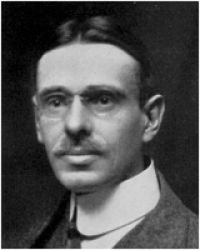
 William Tyler Olcott,
Star Lore Of All Ages — Cassiopeia…
(1911)
William Tyler Olcott,
Star Lore Of All Ages — Cassiopeia…
(1911)
“ Burritt thus describes the changes in colour observed in Tycho's star: "At first appearance it was of a dazzling white, then of a reddish yellow, and lastly of an ashy paleness in which its light expired." "It is impossible," says Mrs. Somerville, "to imagine anything more tremendous than a conflagration that could be visible at such a distance." The collision theory seems the best one to account for such phenomena, but the imagination and senses alike fail in any attempt at a realisation of the heat generated by the impact, or the magnitude of the ensuing conflagration. ”
