Summary

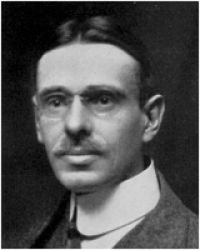
Portrait of William Tyler Olcott William Tyler Olcott Star Lore Of All Ages — Draco, the Dragon (1911)

There seems to have been a special effort on the part of the originators of the constellations, at the outset almost, to symbolise by a star group the presence of the Evil One, ever watchful, ever vigilant, gazing down upon mortals from the high heavens, as a perpetual menace to evil-doers and a continual reminder of original sin.
The constellations Draco and Hercules are closely associated in ancient mythology, and Hercules is always represented as trampling the Dragon underfoot.
Source: Wikisource

Portrait of William Tyler Olcott William Tyler Olcott Star Lore Of All Ages — Draco, the Dragon (1911)

There can be little doubt that in these star groups we have evidence of the very earliest attempts of man to engrave a record of history and tradition for all humanity to read, and that in the history of these constellations lies the key to many of the mooted religious questions of the day.
The Arabs knew Draco as "Al-Tinnìn," and "Al-Thubān," and had names for all the brighter stars in the constellation, many of which represented to their imagination goats or camels. The Egyptians, it is said, also called Draco "Tanen" at one time. This name is still retained by the star γ Draconis.
Source: Wikisource

Portrait of William Tyler Olcott William Tyler Olcott Star Lore Of All Ages — Draco, the Dragon (1911)

There is no doubt that Draco dates from the earliest times, as Eudoxus and Aratos both mention this constellation, and many believe that it represents the crooked serpent of Job xxvi., 13.
Of all creatures the serpent is historically the most interesting. It is referred to in myth and legend more often than any other, and connected as it is with the very story of Eden, it is linked with the earliest history of man as no other creature is.
Source: Wikisource

Get perspective with Kwize: daily news enlightened by great literature