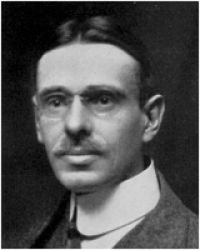
William Tyler Olcott

William Tyler Olcott

Summary

Portrait of William Tyler Olcott William Tyler Olcott Star Lore Of All Ages — Ursa Minor… (1911)

The mariners of the ancient and modern worlds have placed an equal faith in the guiding beams of this steadfast star. Phœnician barks and Roman triremes, the ships of the Spanish Armada, and those that bore the early adventurers and explorers over the unknown seas, as well as the canoes and rude dugouts of the savages of many lands, have all turned their prows alike in answer to its beckoning light.
Source: Wikisource

Portrait of William Tyler Olcott William Tyler Olcott Star Lore Of All Ages — Ursa Minor… (1911)

A hunting party of Indians lost their way, and being in doubt which way to proceed they prayed to the gods to direct them homeward. During their deliberations a little child appeared in their midst and proclaimed herself to be the spirit of the Pole Star and their guide. Following her they reached home safely, and thereafter called the Pole Star 'the star which never moves.' When the hunters died they were carried up into the heavens, and we can see them in the stars of the Little Dipper following the Pole Star faithfully every clear night.
Source: Wikisource

Portrait of William Tyler Olcott William Tyler Olcott Star Lore Of All Ages — Ursa Minor… (1911)

Our word "cynosure" gets its meaning from Polaris, which has always been the most observed of all stars.
The Arabic name for Polaris was "the Kid," and their astronomers called it "the star of the north." It was also known in Arabia as "the hole in which the axle of the earth was borne." There was a belief among the common people of Arabia that a fixed contemplation of this star would cure itching of the eyelids.
Poets of all nations in all periods of the world's history have sung the praises of the North Star.
Marvell writes of it:
By night the northern star their way directs.
Source: Wikisource

Get perspective with Kwize: daily news enlightened by great literature