Summary

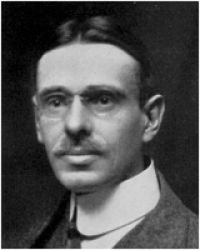
Portrait of William Tyler Olcott William Tyler Olcott Star Lore Of All Ages — Ophiuchus or Serpentarius… (1911)

They are the only two constellations that seem identical in design, and in these ancient constellations we see clearly a desire on the part of primitive man to place on record, for all the ages to read, the great fact of the triumph of man over the serpent, the symbol of the powers of evil.
Krishna, one of the most revered gods of India, is often represented as standing with one foot on a serpent's head, and holding it up by the tail, a reduplication of the figures and the ideas embodied in the constellation figures, Hercules and Ophiuchus.
Source: Wikisource

Portrait of William Tyler Olcott William Tyler Olcott Star Lore Of All Ages — Ophiuchus or Serpentarius… (1911)

On the old maps, Ophiuchus is represented as a venerable man, having both hands clenched in the folds of a great serpent which is writhing in his grasp with its head close to the Crown; whence the Serpent is often said "to be licking the Crown." The constellation is of great antiquity, as the records show that it was known to the ancients twelve hundred years before the Christian era.
Source: Wikisource

Portrait of William Tyler Olcott William Tyler Olcott Star Lore Of All Ages — Ophiuchus or Serpentarius… (1911)

In the Middle Ages, the Serpent-Bearer was sometimes regarded as symbolising Moses with the Brazen Serpent, and Golius insisted that this sky figure represented a Serpent Charmer. Al-Sufi's title, "le Psylle," meaning one skilled in the cure of snake bites, seems to confirm this view.
Ophiuchus is also identified with Laocoōn, the priest of Neptune, who during the siege of Troy was attacked and strangled by sea serpents, for his irreverent treatment of the wooden horse.
Pliny regarded the stars in this constellation as dangerous to mankind, occasioning much mortality by poisoning.
Source: Wikisource

Get perspective with Kwize: daily news enlightened by great literature