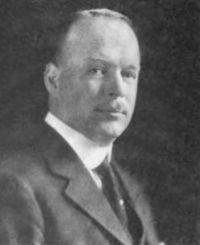
William Walker Rockwell

William Walker Rockwell

Summary

Portrait of William Walker Rockwell William Walker Rockwell 1911 Encyclopædia Britannica (1911)

Yet it would be a misconception to suppose that the Vatican decrees mean the surrender of the ancient belief in the infallibility of oecumenical synods; their decisions may still be regarded as more solemn and more impressive than those of the pope alone; their authority is fuller, though not higher. At present it is agreed that the pope has the sole right of summoning oecumenical councils, of presiding or appointing presidents and of determining the order of business and the topics which shall come up.
Source: Wikisource

Portrait of William Walker Rockwell William Walker Rockwell 1911 Encyclopædia Britannica (1911)

The papal confirmation is indispensable; it is conceived of as the stamp without which the expression of conciliar opinion lacks legal validity. In other words, the oecumenical council is now practically in the position of the senate of an absolute monarch. It is in fact an open question whether a council is to be ranked as really oecumenical until after its decrees have been approved by the pope. (See Vatican Council, Ultramontanism, Infallibility.)
Source: Wikisource

Portrait of William Walker Rockwell William Walker Rockwell 1911 Encyclopædia Britannica (1911)

Moreover, in the last decade of the 19th century a growing desire for a rapprochement between the Free Churches in the United Kingdom as a whole led to the annual assembly of the Free Church Council for the consideration of all matters affecting the dissenting bodies. This body has no executive or doctrinal authority and is rather a conference than a council. In general it may be said that synods are becoming more and more powerful in Protestant lands, and that they are destined to still greater prominence because of the growing sentiment for Christian unity.
Source: Wikisource

Get perspective with Kwize: daily news enlightened by great literature