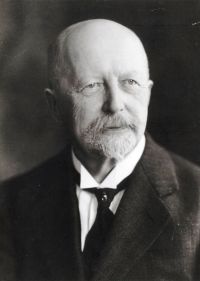
Carl Theodor Mirbt

Carl Theodor Mirbt

Summary

Portrait of Carl Theodor Mirbt Carl Theodor Mirbt 1911 Encyclopædia Britannica (1911)

The whole life-work of Gregory VII. was based on his conviction that the church has been founded by God and entrusted with the task of embracing all mankind in a single society in which His will is the only law; that, in her capacity as a divine institution, she outtops all human structures; and that the pope, qua head of the church, is the vice-regent of God on earth, so that disobedience to him implies disobedience to God—or, in other words, a defection from Christianity.
Source: Wikisource

Portrait of Carl Theodor Mirbt Carl Theodor Mirbt 1911 Encyclopædia Britannica (1911)

In the time of Gregory the conflict was still swaying to and fro, and he himself in 1078 declared consecration by a simoniac null and void.
The pontificate of Gregory VII. came to a melancholy close, for he died an exile in Salerno; the Romans and a number of his most trusted coadjutors had renounced him, and the faithful band in Germany had shrunk to scant proportions. Too much the politician, too rough in his methods, too exclusively the representative of the Roman see and its interests, he had gained more enemies than friends.
Source: Wikisource

Portrait of Carl Theodor Mirbt Carl Theodor Mirbt 1911 Encyclopædia Britannica (1911)

NICAEA, COUNCIL OF. The Council of Nicaea (A.D. 325) is an event of the highest importance in the history of Christianity. Its convocation and its course illustrate the radical revolution which the position of this religion, within the confines of the Roman empire, had undergone in consequence of the Edict of Milan. Further, it was the first ecumenical council, and this fact invested it with a peculiar halo in the eyes of subsequent ages; while among its resolutions may be found a series of decisions which acquired a lasting significance for the Christian Church.
Source: Wikisource

Get perspective with Kwize: daily news enlightened by great literature