Summary

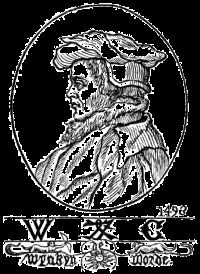
Portrait of Wynkyn de Worde Wynkyn de Worde The Pain and Sorrow of Evil Marriage

In the second line we ought to read “sayes [13] ” for “sayth,” as the rhyme evidently shews. The last stanza of the body of the poem is in the same spirit.
“Better it is in youth a wyfe for to take,
And lyve with her to goddes pleasaunce,
Than to go in age, for goddes sake,
In worldly sorowe and perturbaunce,
For youthes love and utteraunce,
And than to dye at the last ende,
And be dampned in hell with the foule fende.”
Source: Gutenberg

Portrait of Wynkyn de Worde Wynkyn de Worde The Pain and Sorrow of Evil Marriage

The second piece of ancient facetiæ, “the complaynte of them that ben to late maryed,” is [9] written with much more humour, and is far better worth preservation, but it is disfigured by indelicacy, though not of the grossest kind, and never introduced but for the sake of heightening the drollery. It is the lamentation of an elderly gentleman, who after a youth of riot had married a young frolicksome wife, and he relates very feelingly the inconveniences, annoyances, and jealousies to which he is thereby exposed.
Source: Gutenberg

Portrait of Wynkyn de Worde Wynkyn de Worde The Pain and Sorrow of Evil Marriage

Each of the tracts has a wood-cut on the titlepage, but only that called “The payne and sorowe of evyll maryage,” can be said to have anything to do with the subject, and that no doubt had been used for other works: it represents [7] a marriage ceremony,—a priest joining the hands of a couple before the altar.
The “complaynt of them that be to soone maryed” opens with the following stanza
Source: Gutenberg

Get perspective with Kwize: daily news enlightened by great literature