Čeněk Dušek

Čeněk Dušek

Summary

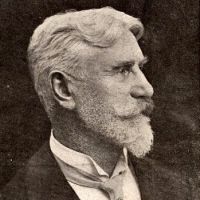
Portrait of Čeněk Dušek Čeněk Dušek Bohemia's claim for freedom (1915)

The Bohemians proudly call this era their golden age. But the anti-Reformation put a cruel stop to it, and stunned that spirited nation for centuries.
The orders dealing with heretics, which attempted to frighten them out of their belief and to beguile them of their treasures, were nowhere else surpassed in stringency. The hiding and reading of forbidden books meant death. The last victim of these execrable laws in Bohemia was the forrester Thomas Svoboda, sentenced to death at the stake in 1755 for reading the Bible, who by way of mercy was strangled before being burnt.
Source: Wikisource

Portrait of Čeněk Dušek Čeněk Dušek Bohemia's claim for freedom (1915)

The Roman Catholic Church, too, has published several beautiful editions of the Bible during the last fifty years, and those who have learnt to read the signs of the times, declare that: "Nobody can deny the existence of a deep religious spirit in modern Bohemia. Attempts to explain this may vary, but the facts leave no room for doubt that every day the connection between religion and life grows stronger. Religion demands attention, and the interest in it is growing."
Source: Wikisource

Portrait of Čeněk Dušek Čeněk Dušek Bohemia's claim for freedom (1915)

It remains always an object of wonder how it was possible that the Unity of Brethren undertook to publish an edition of the Bible in six big volumes when there were so many excellent editions, as that of Melantrich and Severin, already in circulation. And it seems all the more wonderful when one knows that the same work had three times to be republished within a few years, in a nation numbering then no more than about five millions.
During the persecution (1620-1781) all the Bibles that were clandestinely imported into Bohemia and Moravia were printed abroad by the emigrants.
Source: Wikisource

Get perspective with Kwize: daily news enlightened by great literature