Andrew Melville

Definition and stakes

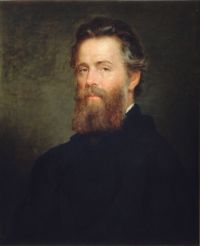
Portrait of Leslie Stephen Leslie Stephen,  Dictionary of National Biography… (1894)

“ In May 1606 Melville was summoned along with his uncle and other ministers to a conference in September with the king in London in regard to the ecclesiastical state of Scotland. After its unsatisfactory termination, and the imprisonment of Andrew Melville in the Tower, 30 April 1607, he was on 6 May permitted to depart from London, but ordered not to proceed further north than Newcastle-on-Tyne, and to confine himself within ten miles of the town during the king's pleasure. ”
Source: Wikisource

David Carnegie Andrew Agnew,  Protestant Exiles from France… (1886)

“ Theodore Beza Was his idol; he also greatly admired Andrew Melville. I quote a part of his first letter to Melville, dated at Paris, 1601 (M‘Crie’s translation) :—
“The present epistle, learned Melville, is dictated by the purest and most sincere affection. Your piety and erudition are universally known, and have endeared your name to every good man and lover of letters. . . . I have always admired the saying of the ancients, that all good men are linked together by a sacred friendship, although often separated by many a mountain and many a town.
”
Source: Wikisource

William Morison,  Andrew Melville

“ On the last day of November—it was a Sabbath—Melville, with his nephew and Wallace, was summoned to Whitehall to answer for certain Latin verses which had come into the King's hand. These were the lampoon which Melville had made on the Michaelmas service in the Royal Chapel, and he at once acknowledged the authorship. Interrupted in his apology by the Primate, Bancroft, who presided in the absence of the King, and who denounced his offence as treason, he turned upon him the torrent of his invective. 'My lords,' exclaimed he, 'Andrew Melville was never a traitor. ”
Source: Gutenberg

Get perspective with Kwize: daily news enlightened by great literature