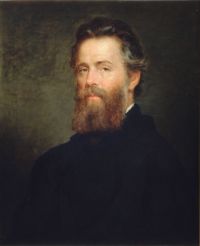
“ Was it possible that, after all our vicissitudes, we were really in the terrible valley of Typee, and at the mercy of its inmates, a fierce and unrelenting tribe of savages? Typee or Happar? I shuddered when I reflected that there was no longer any room for doubt; and that, beyond all hope of escape, we were now placed in those very circumstances from the bare thought of which I had recoiled with such abhorrence but a few days before. What might not be our fearful destiny? ”
Typee
Definition and stakes
The theme of Typee encompasses Herman Melville’s 1846 novel, a vivid depiction of his fictionalized sojourn among the Marquesas Islands, as well as broader literary investigations into typological characterization. Melville’s narrative draws readers into the conflict between Western expectations and Polynesian culture, as illustrated by his portrayals of the Typee valley and the islanders’ “whiteness of their teeth,” contrasted with a sense of existential unease.
Beyond Melville, writers such as George Edward Woodberry and Mervin James Curl explored the function of “type” in literature—idealized character models—while Rachel Harriette Busk emphasized the relationship between individuality and cultural expression in storytelling. This theme therefore connects particular cultural encounters with broader literary techniques, demonstrating how archetypes and real-world settings influence narrative identity.
Quotes about “Typee”
“ When I first visited this singular place with Kory-Kory, he told me—or, at least, I so understood him—that the chief was paddling his way to the realms of bliss and bread-fruit—the Polynesian heaven—where every moment the bread-fruit trees dropped their ripened spheres to the ground, and where there was no end to the cocoa-nuts and bananas; there they reposed through the live-long eternity upon mats much finer than those of Typee; and every day bathed their glowing limbs in rivers of cocoa-nut oil. ”
 D. H. Lawrence,
Studies in Classic American Literature…
(1923)
D. H. Lawrence,
Studies in Classic American Literature…
(1923)
“ If you prostitute your psyche by returning to the savages, you gradually go to pieces. Before you can go back, you have to decompose. And a white man decomposing is a ghastly sight. Even Melville in Typee. ”
“ Nothing in the appearance of the islanders struck me more forcibly than the whiteness of their teeth. The novelist always compares the masticators of his heroine to ivory; but I boldly pronounce the teeth of the Typees to be far more beautiful than ivory itself. The jaws of the oldest greybeards among them were much better garnished than those of the youths of civilized countries; while the teeth of the young and middle-aged, in their purity and whiteness, were actually dazzling to the eye. ”
Furneaux Jordan, Body, Parentage and Character in History…
“ One of the most, perhaps the most, fundamental and important classification of men and women is that which puts them into two divisions or two temperaments, the active, or tending to be active, on the one hand, and the reflective, or tending to be reflective, on the other. ”
 F. H. Bradley,
Appearance and Reality — Chapter II
(1893)
F. H. Bradley,
Appearance and Reality — Chapter II
(1893)
“ We have seen that the distinction of primary from secondary qualities has not taken us far. Let us, without regard to it, and once more directly turning to what meets us, examine another way of making that intelligible. We find the world’s contents grouped into things and their qualities. ”
 James Frederick Ferrier,
Berkeley and Idealism
(1883)
James Frederick Ferrier,
Berkeley and Idealism
(1883)
“ All the secondary qualities, colours, sounds, tastes, smells, heat, hardness, everything, in short, which is an affection of sense, may be generalised at one sweep into our mere knowledge of things. But the primary qualities, which are usually restricted to extension and figure, and which constitute, it is said, the objective or real essence of things, and which are entirely independent of us, into what shall they be generalised? ”
 George Edward Woodberry,
Heart of Man
George Edward Woodberry,
Heart of Man
“ Human life, as represented in literature, consists of two main branches, character and action. Of these, character, which is the realm of personality, is generalized by means of type, which is ideal character; action, which is the realm of experience, by plot, which is ideal action. It is convenient to examine the nature of these separately. A type, the example of a class, contains the characteristic qualities which make an individual one of that class ”
Rachel Harriette Busk, Sagas from the Far East; or, Kalmouk and Mongolian traditionary tales… (1873)
“ If therefore you find some tales in one collection bearing a close resemblance with those you have read in another, you should make it a matter of interest to observe what is individual in the character of each, and to trace the points both of diversity and analogy in the mode of expression in which they are clothed, and which will be found just as marked as the difference in costume of the respective peoples who have told them each after their own fashion. ”
Mervin James Curl, Expository Writing
“ But when we have inveighed as much as we need against the dangers of classification, we must swing round to the first statement that for unifying the character and giving it fundamental significance such classification is of great importance.Merely to find the type to which a character belongs is not sufficient; such a process leaves the character stamped, to be sure, but without interest. We care for living people not chiefly because of their type but because of their individuality, the little traits that set them apart from their fellows. ”
author:Ovid, Metamorphoses (1727)
“ To know the politer Languages of the present Age, as a Native, and the greater Occurrences, and Periods of the Past, as an Historian, make up a Character, which is so obvious, that Every one will know where to apply it, except the Person, whose it really is: and if in this Your Royal Highness be at a Loss, I think it is the only thing within the Province of Your Sex You are ignorant of. ”
 John Stuart Mill,
The Subjection of Women
John Stuart Mill,
The Subjection of Women
“ There was a time when the division of mankind into two classes, a small one of masters and a numerous one of slaves, appeared, even to the most cultivated minds, to be a natural, and the only natural, condition of the human race. ”
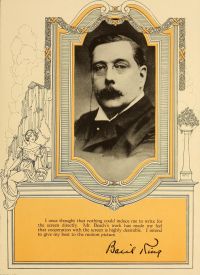 Basil King,
The City of Comrades
Basil King,
The City of Comrades
“ She weighed this, a forefinger against a cheek.“The big ways are those which indicate character, aren’t they? While the little ones only make for habits. Men differ as to their habits, but in character they’re all cut on the same pattern—two or three patterns at most.” ”
John Stuart Mill,
A System of Logic, Ratiocinative and Inductive
(1881)
“ Note here, that it is by no means intended to imply that there may not be different Kinds, or logical species, of man. The various races and temperaments, the two sexes, and even the various ages, may be differences of kind, within our meaning of the term. ”
Hutcheson Macaulay Posnett, Comparative Literature (1886)
“ But this evolution of personal character—under which we include the actions, instincts, emotions, reason, imagination of the individual unit—must not be viewed apart from the extent to which it prevails, that is, the number of units in any social group who may be regarded as having attained a given standard of such evolution. ”
 Remy de Gourmont,
The Natural Philosophy of Love
Remy de Gourmont,
The Natural Philosophy of Love
“ In the state of differentiation to which superior and cultivated human species have attained, each individual forms surely a separate variety determined by what is called, abstractly, "the character." ”
 Francis Galton,
Inquiries into Human Faculty and Its Development
Francis Galton,
Inquiries into Human Faculty and Its Development
“ Various forms of natural character and temperament would no doubt be found to occur in constant proportions among any large group of persons of the same race, but what those proportions may be has never yet been investigated. ”
Ray Vaughn Pierce, The People's Common Sense Medical Adviser in Plain English
“ What then is a Temperament but a mixing together of these determining forces, a certain blending manifested in the constitution by signs, or traits, which we denominate character. The different races of mankind must have their several standards of temperament, for the peculiarities of one are not fully descriptive of, and applicable to the other. ”
 John Aikin,
Miscellaneous Pieces, in Prose
John Aikin,
Miscellaneous Pieces, in Prose
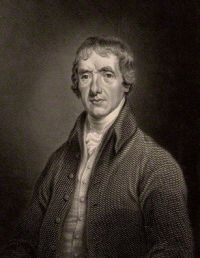
“ Besides the arrangements which nation and profession make of mankind, there are certain natural classes formed from the diversities of personal character. Although the varieties of temper and disposition in men are infinite, so that no two persons probably ever existed in whom [Pg 14] there was an exact conformity, yet there are certain leading features of character which produce a general resemblance among numerous individuals. ”
E. W. Burgess, Introduction to the Science of Sociology
“ If we could list all the traits, each representing some one characteristic of human nature, and measure the amount of each of them possessed by a man, we could represent his nature—read his character—in a great equation. ”
William James, The Principles of Psychology, Volume 1…
“ It seems reasonable to me—upon the hypothesis that it is a person using another's mind or brain—that there must be more or less of that other's style or tone incorporated in the message, and that to the unseen personality, i.e., the power which impresses, the thought, the fact, or the philosophy, and not the style or tone, belongs. ”
William Armes, A Defence of the Inquiry into Mesmerism & Phrenology
“ They have, in pursuance of their Theory, mapped out the human scull into compartments, to each of which they have assigned a particular faculty or sentiment, and they profess to tell, with some degree of accuracy, the individual character by the peculiar formation of the head. ”
 Plato,
The Republic of Plato
(1901)
Plato,
The Republic of Plato
(1901)
“ What classes of things have a greater share of pure existence, in your judgment—those of which food and drink and condiments and all kinds of sustenance are examples, or the class which contains true opinion and knowledge and mind and all the different kinds of virtue? ”
Alexander Walker, Beauty: Illustrated Chiefly by an Analysis and Classificatin of Beauty in Woman
“ C. arrives, and which he maintains with great ingenuity is, that independently of all other causes, differences in human temperament are to be attributed, in part, to corresponding differences in the organization of certain portions, or the whole of the body; and that, other things being equal, in consequence of this source of influence alone, one person differs from another in many of the qualities of both person and intellect. ”
 John Sullivan Dwight,
Aesthetic Papers
(1849)
John Sullivan Dwight,
Aesthetic Papers
(1849)
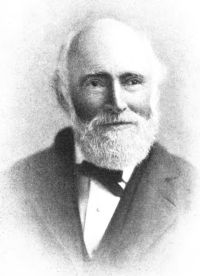
“ To the three spheres of sentiment, of science, and of practice, conform three classes of character, in whom each respectively predominates. We feel the spirit of the first; we admire the intellect of the second; we deal only with the actions of the third. We turn to the first for inspiration and for influence ”
Samuel R. Wells, How to Behave: A Pocket Manual of Republican Etiquette…
“ Each variety of form, color, and character has its appropriate style; but our space here is too limited to allow us to do more than drop a hint toward what each requires, to produce the most harmonious and effective combination. ”
 John Ludlum McConnel,
Western Characters; or, Types of Border Life in the Western States
John Ludlum McConnel,
Western Characters; or, Types of Border Life in the Western States
“ The pursuit of a certain avocation, for a long period, is apt to warp one's nature to its inequalities; and as the character gradually assumes the peculiar shape, the personal appearance changes in a corresponding direction and degree. ”
 Robert Green Ingersoll,
The Works of Robert G. Ingersoll…
Robert Green Ingersoll,
The Works of Robert G. Ingersoll…
“ Types are blown in the one direction by the one wind—characters have pilots. In real people, good and evil mingle. Types are all one way, or all the other—all good, or all bad, all wise, or all foolish. ”
 Timothy East,
The Sheepfold and the Common; Or…
Timothy East,
The Sheepfold and the Common; Or…
“ Whether the varieties which are apparent in the human character are to be traced up to the different methods employed in its formation, or to some inherent peculiarity in the constitution of the mind, is a much vexed question amongst philosophers. Education and example no doubt exercise a most material influence, but they do not operate in a uniform manner, as we have known the most opposite characters rise out of the same family. ”
Joseph Anderson, Scotland in Pagan Times; The Iron Age
“ It is a type possessing features so distinct and peculiar, so numerous and well marked, so pronounced in their absolute individuality, that if it exists anywhere it is capable of being instantly recognised. ”
G. Maspero, History of Egypt, Chaldæa, Syria…
“ Everywhere we observe the traits of character distinctive of the individual and his position, rendered with a scrupulous fidelity: nothing is omitted, no detail of the characteristics of the model is suppressed. ”
 Amelia E. Barr,
Maids, Wives, and Bachelors
Amelia E. Barr,
Maids, Wives, and Bachelors
“ But these two great classes have wide and indefinite varieties, and the bright little woman with her innocent audaciousness, and the graceful, swan-necked angel, with her fine feelings and her softly spoken compliments, are but types of species that have infinite peculiarities, and distinctions. ”
William Hazlitt, The Collected Works of William Hazlitt…
“ And as there is one general form, which, as I have said, belongs to the human kind at large, so in each of these classes there is one common idea which is the abstract of the various individual forms belonging to that class. ”
 Aristotle,
Aristotle's Psychology (On the Soul…
Aristotle,
Aristotle's Psychology (On the Soul…
“ The first point however which demands our attention is to determine in which of the higher classes soul is included and what is its generic character — whether, in other words, it is an individual thing and real substance or a quality or quantity or any other of the categories as they have been distinguished. ”
 Alexander Bain,
Popular Science Monthly
(1878)
Alexander Bain,
Popular Science Monthly
(1878)
“ It is for individuals in all their multiplicity of influence that we contract likings or affections; and, according as the charm of sense, and especially the color-sense, is strong in us, we are averse to the classing or generalizing operation. ”
“ The two great distinctions which mark the intellects of our species, seem to consist in the difference of character, which is established by those who excel in the exercise of their perceptions and consequent recollection, and those who cultivate and discipline the energies of thought. ”
 Rudolf Hermann Lotze,
Outlines of Metaphysic — First Principal DivisionOntology
(1883)
Rudolf Hermann Lotze,
Outlines of Metaphysic — First Principal DivisionOntology
(1883)
“ In actuality there is, from the very beginning onward, nothing but just these individually limited and definite qualities, from which only we, by our comparative thinking, subsequently form the abstraction of a universal, unmoulded ‘Quality.’ And it is precisely the aforesaid limited qualities that are the things themselves. ”
 James George Frazer,
The Golden Bough
(1922)
James George Frazer,
The Golden Bough
(1922)
“ Their generic attributes are known, but their individual histories and characters are not the subject of myths. For they exist in classes rather than as individuals, and the members of each class are indistinguishable. ”
 William Isaac Thomas,
The Unadjusted Girl, With Cases and Standpoint for Behavior Analysis
William Isaac Thomas,
The Unadjusted Girl, With Cases and Standpoint for Behavior Analysis
“ We may therefore define character as an expression of the organization of the wishes resulting from temperament and experience, understanding by “organization” the general pattern which the wishes as a whole tend to assume among themselves. ”
William James, The Varieties of Religious Experience (1902)
“ I reply at once that where the character, as something distinguished from the intellect, is concerned, the causes of human diversity lie chiefly in our differing susceptibilities of emotional excitement, and in the different impulses and inhibitions which these bring in their train. ”
St. George William Joseph Stock, Deductive Logic
“ An abstract term like 'scarlet,' which is the name of one definite attribute, may be reckoned 'individual,' while a term like 'human nature,' which is the name of a whole group of attributes, would more fitly be regarded as collective. ”
 A. E. Taylor,
Elements of metaphysics
(1903)
A. E. Taylor,
Elements of metaphysics
(1903)
“ Again, we should have once more to remember that since, in general, we call that group of qualities one which acts on our interests as one, and our insight into those interests themselves is limited and confused, the boundaries assigned by us to the group of qualities we ascribe to a single substance as “its” states will be more or less arbitrary, and dependent upon the degree of our actual insight. ”
 Ernest Jones,
The American Journal of Psychology
(1910)
Ernest Jones,
The American Journal of Psychology
(1910)
“ In this way one person, of complex character, gets replaced by several, each of whom possesses a different aspect of the character that in a simpler form of the myth was combined in one being; usually the different individuals closely resemble one another in other respects, for instance in age. ”
Henry Eliot Howard, The British Warblers A History with Problems of Their Lives… (1908)
“ And pursuing the subject somewhat further, if we not only accept variation as an established fact, but look upon intelligence as the principal factor, as it is so regarded by many, then the attempt to explain the stereotyped uniformity, which we everywhere see around us, becomes even more difficult. ”
 George MacDonald,
A Dish of Orts : Chiefly Papers on the Imagination…
(1893)
George MacDonald,
A Dish of Orts : Chiefly Papers on the Imagination…
(1893)
“ Thus the indications of character, of peculiarity, so predominate, the whole is so much of one colour, that the result resembles one of those allegorical personifications in which, as much as possible, everything human is eliminated except what belongs to the peculiarity, the personification. ”
William Rounseville Alger, The Friendships of Women
“ The greater the number of types of character exhibited to the public, and the greater the facility of comparison between them, the more sharply defined, and the more clearly recognized, will the best one be. ”
 Georg Wilhelm Friedrich Hegel,
The Philosophy of Fine Art, volume 2…
Georg Wilhelm Friedrich Hegel,
The Philosophy of Fine Art, volume 2…
“ It is therefore in the first place concerned to personify abstract conditions of a general character or similar qualities both from the human and the natural world, such as religion, love, justice, strife, fame, war, peace, the seasons, death, and the like, and conceive them under the mode of personality. ”
 Harry L. Hollingworth,
Vocational Psychology: Its Problems and Methods
Harry L. Hollingworth,
Vocational Psychology: Its Problems and Methods
“ Since these individual differences, in all the investigations that have been reported, are so conspicuous, we may next inquire whether the individual who possesses a given trait in high degree is a better or worse judge of that trait in himself and in others, than is a person in whom the trait itself is less marked. ”
 William Whewell,
History of scientific ideas
(1858)
William Whewell,
History of scientific ideas
(1858)
“ That we do apprehend surrounding objects as belonging to permanent kinds, as being men and horses, oaks and roses, arises from our having the idea of likeness, and from our applying it habitually, and so far as such a classification requires. ”
