Summary

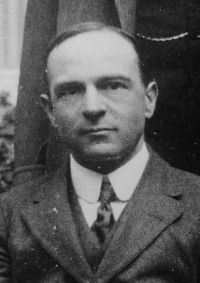
Portrait of Ernest Jones Ernest Jones The American Journal of Psychology (1910)

On the contrary, not once is there any sort of failure in moral or physical courage except only in the matter of the revenge. In the second place, as will later be expounded, Hamlet's attitude is never that of a man who feels himself not equal to the task, but rather that of a man who for some reason cannot bring himself to perform his plain duty. The whole picture is not, as Goethe depicted, that of a gentle soul crushed beneath a colossal task, but that of a strong man tortured by some mysterious inhibition.
Source: Wikisource

Portrait of Ernest Jones Ernest Jones The American Journal of Psychology (1910)

In him, as in every victim of a powerful unconscious conflict, the Will to Death is fundamentally stronger than the Will to Life, and his struggle is at heart one long despairing fight against suicide, the least intolerable solution of the problem. Being unable to free himself from the ascendency of his past he is necessarily impelled by Fate along the only path he can travel to Death. In thus vividly exhibiting the desperate but unavailing struggle of a strong man against Fate, Shakspere achieved the very essence of the Greek conception of tragedy.
Source: Wikisource

Portrait of Ernest Jones Ernest Jones The American Journal of Psychology (1910)

If Hamlet had simply slain his uncle, and then proclaimed, without a shred of supporting evidence, that he had done it to avenge a fratricide, the nation would infallibly have cried out upon him, not only for murdering his uncle to seize the throne himself, but also for selfishly seeking to cast an infamous slur on the memory of a man who could no longer defend his honour.
Source: Wikisource

Get perspective with Kwize: daily news enlightened by great literature