Arcangelo Corelli

Definition and stakes

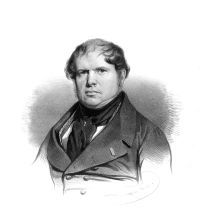
Portrait of François-Joseph Fétis François-Joseph Fétis,  Biographical notice of Nicolo Paganini

“ Arcangelo Corelli, a name justly celebrated in the annals of music, will descend to ages unborn without losing a particle of its glory, whatever revolutions may be effected in the domains of art. The great artist who bore that name, no less celebrated for his compositions than for his marvellous execution at that period, was born in 1653, at Fusignano, a small town in the States of the Church, and died at Rome, on the 18th of January, 1713. His contemporaries were not jealous of his glory, for the whole of Europe welcomed his talent with unanimous acclamations ”
Source: Gutenberg

W. J. Baltzell,  A Complete History of Music

“ Corelli.—In any great movement one man seems to sum up the best of the work of his predecessors. The name associated with putting violin music and playing on a firm foundation is that of Arcangelo Corelli (1653-1713) , eminent both as composer and player. He was a contemporary of Guarnerius and Stradivarius, who brought the instrument to perfection. Of Corelli’s early life little is known. He traveled in France and was also in Munich for some years. In 1681 he returned to Italy, making his home at Rome. As a teacher, he acquired great fame and pupils came to him from all parts of Europe. ”
Source: Gutenberg

1911 Encyclopædia Britannica, Volume 7… (1911)

“ The style of execution introduced by Corelli and preserved by his pupils, such as Geminiani, Locatelli, and many others, has been of vital importance for the development of violin-playing, but he employed only a limited portion of his instrument’s compass, as may be seen by his writings, wherein the parts for the violin never proceed above D on the first string, the highest note in the third position ”
Source: Wikisource

Get perspective with Kwize: daily news enlightened by great literature