“ Suddenly over the water from the galleon came a loud hail. Asad laughed, and in the darkness shook his fist at them, cursing them in the name of Allah and his Prophet. And then, in answer to that curse of his, the galleon’s side belched fire; the calm of the night was broken by a roar of thunder, and something smote the water ahead of the Muslim vessel with a resounding thudding splash. In fear Rosamund drew closer to Sakr-el-Bahr. But Asad laughed again. “No need to fear their marksmanship,” he cried. “They cannot see us. Their own lights dazzle them. On! On!” ”
Asad
Definition and stakes
Asad, a central figure in Rafael Sabatini’s The Sea-Hawk, embodies the intricate relationship between faith, power, and loyalty within 16th-century North African corsair culture. Depicted as a pious Muslim leader, Sabatini’s Asad moves through political maneuvering and personal connections, such as his guidance of Sakr-el-Bahr and conflicts with Rosamund, showcasing both Islamic devotion and the practical realities of naval combat.
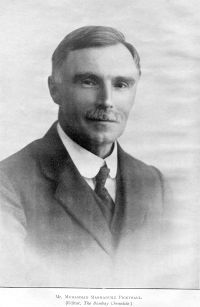
While Marmaduke William Pickthall and Sir William Muir also explored the theme of Asad, Sabatini’s depiction highlights his position as a conflicted yet determined individual, connecting the spiritual with the tactical. The passages portray Asad as a leader of great depth, whose choices blend divine purpose with the pressures of authority, demonstrating the delicate balance between religious and political influence in the corsair world.
Quotes about “Asad”
“ Asad, who had ever esteemed him, grew to love him. An intensely devout man, could he have done less in the case of one for whom the Pitying the Pitiful showed so marked a predilection? It was freely accepted that when the destiny of Asad-ed-Din should come to be fulfilled, Sakr-el-Bahr must succeed him in the Bashalik of Algiers, and that thus Oliver-Reis would follow in the footsteps of Barbarossa, Ochiali, and other Christian renegades who had become corsair-princes of Islam. ”
“ And as he yet hesitated perhaps Sakr-el-Bahr assisted his piety to gain the day. “Now you will understand why I would not yield her, O mighty Asad,” he said. “Thyself hast thou oft and rightly reproached me with my celibacy, reminding me that it is not pleasing in the sight of Allah, that it is unworthy a good Muslim. At last it hath pleased the Prophet to send me such a maid as I could take to wife.” Asad bowed his head. “What is written is written,” he said in the voice of one who admonished himself. Then he raised his arms aloft. “Allah is All-knowing,” he declared. “His will be done!” ”