Battle of Dunbar

Definition and stakes

Louis A. Barbé,  In Byways of Scottish History

“ The first occasion on which this is reported to have occurred was the battle of Dunbar, in 1296. The Castle, at that time one of the most important in Scotland, had been delivered over to the Scottish leaders by the Countess of Dunbar. Edward I at once sent John Plantagenet, Earl of Warrenne and Surrey, to recapture it. The garrison, conscious of its inability to hold out against the ten thousand foot and the thousand heavy-armed horse which the English leader commanded, agreed to surrender to him if it were not relieved within three days. ”
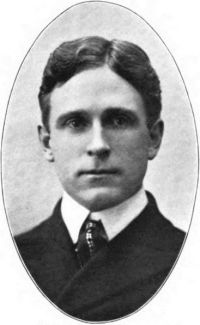
Source: Gutenberg

Portrait of Archer Butler Hulbert Archer Butler Hulbert,  Braddock's Road (1902)

“ But as Braddock's demoralized army threw itself upon him, Dunbar's condition was indescribably wretched. A large portion of the survivors of the battle and of Dunbar's own command, lost to all order, hurried on toward Fort Cumberland. Dunbar himself, now senior officer in command, ordered his cannons spiked and his ammunition destroyed and, with such horses as could be of service, began to retreat across the mountains. ”
Source: Wikisource

Portrait of M. E. Braddon M. E. Braddon,  Henry Dunbar: A Novel

“ Almost every one on the course knew that crest of an armed hand clasping a battle-axe, and knew that it belonged to Henry Dunbar. The banker appeared so very seldom in public that there was always a kind of curiosity about him when he did show himself; and between the races, people who were strolling upon the ground contrived to approach very near the carriage in which the master of Maudesley Abbey sat, wrapped in Cashmere shawls, and half-hidden under a great fur rug, in legitimate Indian fashion. ”
Source: Gutenberg

Get perspective with Kwize: daily news enlightened by great literature