Battle of Isandlwana

Definition and stakes

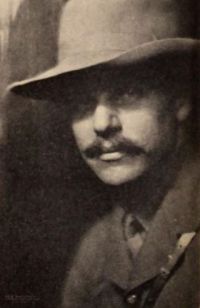
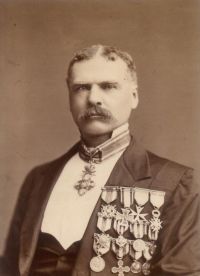
Portrait of Archibald Forbes Archibald Forbes Barracks, Bivouacs and Battles

They must be good men indeed whom a course of such tuition will not demoralise. That it does demoralise, our recent military history goes clearly to show. Our catastrophe at Isandlwana was due partly to the error of employing loose formation against great masses of bold men, whom a biting fire would deter no whit from advancing; but resulted in the end, from the scared inability to redeem this error by a rapid, purposeful resort to close-formation in square or squares.
Source: Gutenberg

H. C. Adams Perils in the Transvaal and Zululand

He had gained a battle at Isandhlwana, but he had lost one at the Inioni river; and presently he discovered that not only had another action been fought and lost at Rorke’s Drift, but that his favourite regiment, the Tulwana, had been half destroyed in it. More red soldiers, he learned, were coming up “out of the sea” to supply the place of those lost. He had no means of filling the vacancies that had been caused in his own army. It was no time for sending troops out of Zululand. He would want all he had for its defence.
Source: Gutenberg

The True Story Book

It is a terrible thing to be obliged, year after year, to keep quiet an army of some fifty or sixty thousand men who are too proud to work and clamour daily to be led to battle that they may die as their fathers died. We may be sure that the heart of many a Zulu warrior beat high as in dead silence he marched that night from the heights of Upindo towards the doomed camp of Isandhlwana, since at last he was to satisfy the longing of his blood, and fight to the death with a foe whom he knew to be worthy of him.
Source: Gutenberg

Get perspective with Kwize: daily news enlightened by great literature