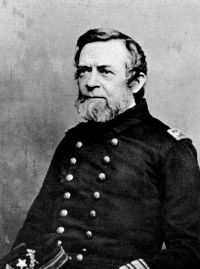
Andrew H. Foote

Andrew H. Foote

Summary

Portrait of Andrew H. Foote Andrew H. Foote Africa and the American Flag (1854)

Let it not be imagined that these dealings of justice with men are at an end. What could atone for giving up the coasts of a whole continent to be ravaged by the slave-ships of France, Spain, and Portugal? What compensation for this vicious and deadly scourge has Africa yet received? The cruising, suffering, sickness, deaths and expenses of nearly half a century have not remedied the crime of signing these treaties.
Source: Gutenberg

Portrait of Andrew H. Foote Andrew H. Foote Africa and the American Flag (1854)

Those who are not acquainted with the ties uniting the slave to his master’s household, and the interest he feels in his master’s welfare, would expect that when a hostile army was present to rescue and to defend them, the whole slave population would rise with eager fury to avenge their subjection, or with eager hope to escape from it. But the historical truth is, that very few indeed of the colored men of the United States, whether slaves or free, joined the English or Tory party in the Revolutionary War.
Source: Gutenberg

Portrait of Andrew H. Foote Andrew H. Foote Africa and the American Flag (1854)

The people have a right to be protected, and the government is bound to enforce that right wherever they go. If they visit foreign countries, they have a right to just treatment. The traveller—the merchant—the missionary—the person of whatever character, if an American citizen, can demand justice. The sea is no foreign territory. Where a merchant vessel bears its country’s flag, it covers its country’s territory. Government is instituted to be watchful for the interests and safety of its citizens. A navy is the organ through which it acts.
Source: Gutenberg

Get perspective with Kwize: daily news enlightened by great literature