Chatsworth

Definition and stakes

With the World's Great Travellers…

“ There is nothing in the regular, classic lines of Chatsworth to remind us of that Chetel, the Saxon, who is believed to have given his name to the place in which he dwelt. His homestead and oxgangs of land fell, as Domesday records, to the Crown, and were given in custody to William Peveril, who had also the stronghold at Castleton, as we have seen, with Haddon by the Wye, and many a castle and manor besides. Nothing now remains of these times at Chatsworth, save, perhaps, the grove of venerable oaks, gnarled, shattered, and time-worn, upon the neighboring hill.... ”
Source: Gutenberg

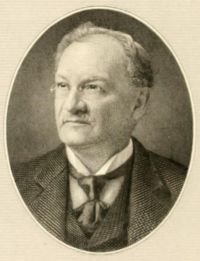
Portrait of Joel Cook Joel Cook,  England, Picturesque and Descriptive…

“ A herd of at least a thousand deer roam at will over the park, and have become very tame. Chatsworth is a brownish-yellow building, square and flat-topped, with a modern and more ornamental wing. Its front extends fully six hundred feet, and in parts it is of that depth. The estate was bought in the sixteenth century by Sir William Cavendish, who built the original house, a quadrangular building with turrets, which was greatly extended by his wife. It was used as a fortress in the Civil Wars, and was considerably battered. ”
Source: Gutenberg

1911 Encyclopædia Britannica, Volume 6… (1911)

“ In 1557 he began to build Chatsworth House, and it was completed after his death by his widow, then countess of Shrewsbury. Here Mary, queen of Scots, spent several years of her imprisonment under the care of the earl of Shrewsbury. During the Civil War, Chatsworth was occasionally occupied as a fortress by both parties. It was pulled down, and the present house begun by William, 1st duke of Devonshire in 1688. The little village consists almost exclusively of families employed upon the estate. ”
Source: Wikisource

Get perspective with Kwize: daily news enlightened by great literature