Summary

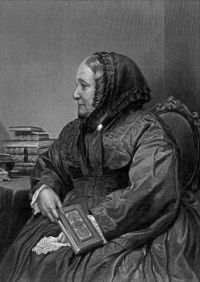
Portrait of Mrs. Jameson Mrs. Jameson Visits and Sketches at Home and Abroad…

Painting, with its lovely colours blending into life, and all its "silent poesy of form," is a source of pleasure more lasting, more intellectual. Beyond both, is sculpture, the noblest, the least illusive, the most enduring of the imitative arts, because it charms us not by what it seems to be, but by what it is; because if the pleasure it imparts be less exciting, the impression it leaves is more profound and permanent; because it is, or ought to be, the abstract idea of power, beauty, sentiment, made visible in the cold, pure, impassive, and almost eternal marble.
Source: Gutenberg

Portrait of Mrs. Jameson Mrs. Jameson Visits and Sketches at Home and Abroad…

Some of Correggio's and Guido's virgins—the virgin of Murillo at the Leuchtenberg palace—have more beauty, in the common meaning of the word; but every other female face, however lovely, however majestic, would, I am convinced, appear either trite or exaggerated, if brought into immediate comparison with this divine countenance. There is such a blessed calm in every feature! and the eyes, beaming with a kind of internal light, look straight out of the picture—not at you or me—not at any thing belonging to this world,—but through and through the universe.
Source: Gutenberg

Portrait of Mrs. Jameson Mrs. Jameson Visits and Sketches at Home and Abroad…

I saw in Stieler's atelier two portraits for this collection: one, a woman of rank—a dark beauty; the other, a servant girl here, with a head like one of Raffaelle's angels, almost divine; she is painted in the little filagree silver cap, the embroidered boddice, and silk handkerchief crossed over the bosom, the costume of the women of Munich, to which the king is extremely partial. I am assured that this young girl, who is not more than seventeen, is as remarkable for her piety, simplicity, and spotless reputation, as for her singular beauty.
Source: Gutenberg

Get perspective with Kwize: daily news enlightened by great literature