“ Or none save what the battle-day Shall wash in seas of blood away, Carolina! Thy skirts, indeed, the foe may part, Thy robe be pierced with sword and dart, They shall not touch thy noble heart, Carolina!VI.Ere thou shalt own the tyrant's thrall, Ten times ten thousand men must fall; Thy corpse may hearken to his call, Carolina! When by thy bier, in mournful throngs, The women chant thy mortal wrongs, 'Twill be their own funereal songs, Carolina! From thy dead breast, by ruffians trod, No helpless child shall look to God; All shall be safe beneath thy sod, Carolina! ”
Quotes about “Carolina wren”
Reginald W. Jeffery, The History of the Thirteen Colonies of North America 1497-1763
“ The history of the Carolinas only resembles that of Maryland in the fact that they were both proprietary colonies. The swampy and low-lying coast to the south of Virginia had, in the early years of colonisation, offered little temptation to settlers, and long remained uninhabited by Englishmen or Spaniards. Certainly in 1564, Laudonnière, a Huguenot gentleman and naval officer, attempted a plantation at Port Royal in South Carolina, and named his fortress Caroline, "in honour of our Prince, King Charles" ”
John W. Moore, School History of North Carolina…
“ No coast in the world is much more dangerous to ships than that of North Carolina. Cape Hatteras is even now the dread of all mariners. It is visited by many storms, and sends its deadly sandbars for fifteen miles out into the ocean to surprise and wreck the ill-fated vessel that has approached too near the coast.8. Governor Lane, while at Roanoke, discovered the broad, deep inlet and safe anchorage at Hampton Roads, within the present limits of Virginia. This port lies, but little to the north of that inlet which Amadas and Barlowe entered on the first English visit to Carolina. ”
M. L. Weems, The Life of General Francis Marion
“ He exclaimed, "God preserve our legislature from such `penny wit and pound foolishness'! What sir, keep a nation in ignorance, rather than vote a little of their own money for education! Only let such politicians remember, what poor Carolina has already lost through her ignorance. What was it that brought the British, last war, to Carolina, but her lack of knowledge? ”
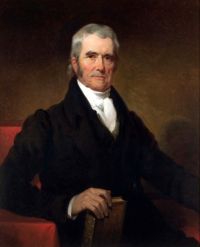 John Marshall,
The Life of George Washington, Vol…
John Marshall,
The Life of George Washington, Vol…
“ Carolina continued to increase slowly in wealth and population without any remarkable incident, except the invasion of its most southern settlement by the Spaniards from St. Augustine. This was occasioned, in part, by the jealousy with which the English colony inspired its neighbours, but was principally, and immediately attributable to the countenance given, in Charleston, to the buccaneers who then infested those seas, and who were particularly hostile to the Spaniards. It was with difficulty the colonists were prevented by the proprietors from taking ample vengeance for this injury. ”
 Hervey Allen,
Carolina Chansons
Hervey Allen,
Carolina Chansons
“ The Peace of Utrecht turned many privateers into pirates, ships which had been habitually preying upon Spanish commerce since Blake's victory at Santa Cruz in 1657, and these gentlemen of fortune were at first welcome in the Carolinas. Nearly all the coin in circulation then was at first brought by such doubtful adventurers, and they were regarded as the natural protectors of the Carolinas against their powerful enemy, the Spaniard, to the south. ”
H. A. Guerber, The Story of the Thirteen Colonies
“ Some fifty years later, a planter's daughter tried to raise indigo. After several failures, she succeeded in doing so, and indigo was raised in Carolina until the time came when cotton paid better. Thanks to its rice, tobacco, indigo, and marine supplies, Carolina became so rich and prosperous that, although it was the twelfth English colony, it soon outstripped several of the rest. The Carolina planters, growing rich, bought many negroes to work their large tracts of land, and spent the greater part of the year at Charleston, where they led a gay life and entertained a great deal. ”
 Mary Johnston,
Pioneers of the Old South: A Chronicle of English Colonial Beginnings
(1918)
Mary Johnston,
Pioneers of the Old South: A Chronicle of English Colonial Beginnings
(1918)
“ At intervals there followed other hardy folk. Quakers, subject to persecution in old Virginia, fled into these wilds. The name Carolina grew to mean backwoods, frontiersman's land. Here were forest and stream, Indian and bear and wolf, blue waters of sound and sea, long outward lying reefs and shoals and islets, fertile soil and a clime neither hot nor cold. Slowly the people increased in number. Families left settled Virginia for the wilderness; men without families came there for reasons good and bad. Their cabins, their tiny hamlets were far apart; they practised a hazardous agriculture ”
 Meredith Nicholson,
The war of the Carolinas
(1909)
Meredith Nicholson,
The war of the Carolinas
(1909)
“ I dare not— (A voice: Oh, don’t be afraid, Governor!) —I dare not take too personally this expression of your good-will. It is not myself but the great state of South Carolina that you honour, and on behalf of mine own people, who have always stood sturdily for the great principles of the constitution (Cheers) ; who have failed in no hour of the country’s need, but have tilled their fields in peace and defended them in the dark days of war, I thank you, my friends, with all my heart, again and again. ”
M. L. Weems, The Life of General Francis Marion
“ That under general Lincoln, after having been duped and butchered at Savannah, was at last completely trapped at Charleston. And that under general Gates, after having been imprudently overmarched, is now cut up at Camden. Thus are all our hopes from the north entirely at an end; and poor Carolina is left to shift for herself. A sad shift indeed, when not one in a thousand of her own children will rise to take her part; but, on the contrary, are madly taking part with the enemy against her. And now, my countrymen, I want to know your minds. ”
William H. Elson, Elson Grammar School Literature…
“ The fruits of industry perished on the spot where they were produced, or were consumed by the foe.The "plains of Carolina" drank up the most precious blood of her citizens. Black and smoking ruins marked the places which had been the habitations of her children. Driven from their homes into the gloomy and almost impenetrable swamps, even there the spirit of liberty survived, and South Carolina, sustained by the example of her Sumters and her Marions, proved, by her conduct, that, though her soil might be overrun, the spirit of her people was invincible. ”
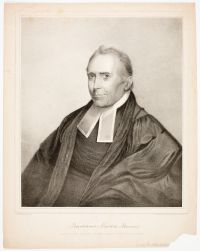 Thaddeus Mason Harris,
Biographical Memorials of James Oglethorpe
Thaddeus Mason Harris,
Biographical Memorials of James Oglethorpe
“ Augustine, it was, nevertheless, of no little consequence, inasmuch as it kept the Spaniards for a long time on the defensive, and the war at a distance; so that the inhabitants of Carolina felt none of its effects as a Colony, excepting the loss suffered by their privateers, till the Spaniards executed their long projected invasion in 1742, in which they employed their whole strength, and from which they expected to have changed the whole face of the Continent of North America; and, even then, the people of Carolina suffered only by their fears. ”
Catherine Albertson, In Ancient Albemarle
“ Carolina responded nobly to the call for troops, as the following extract from a letter from Governor Gabriel Johnston to the Duke of Newcastle will testify: "I can now assure your grace that we have raised 400 men in this province who are just going to put to sea. In those Northern Parts of the Colony adjoining to Virginia, we have got 100 men each, though some few deserted since they began to send them on board the transports at Cape Fear. ”
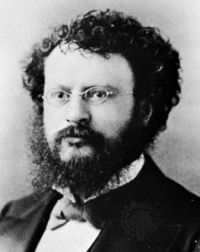 John Fiske,
Old Virginia and Her Neighbours…
John Fiske,
Old Virginia and Her Neighbours…
“ This province was to be called Carolina, either in honour of Charles I., or because the name had been given by the Huguenots in 1562 in honour of Charles IX. of France to a point farther south on that coast and was vaguely applicable to territory between Virginia and Florida. A charter conveying this land to Lord Baltimore had already been made out when Claiborne appeared with his objections, which were supported by other persons in London who were entertaining schemes for founding a sugar-planting colony in Carolina. ”
A. D. Mayo, American Dangers and Duties
“ In the Revolution [8] the great men of Maryland and Virginia clasped the hands of the North, and thus governed the Carolinas, wrested them from utter subjugation, and organized the Constitution over their heads. But South Carolina, Georgia and their children along the Gulf of Mexico have been gaining in power every day in the last half century.South Carolina is now captain of eight States, with a white population of more than 2,000,000, owning a slave population of 1,800,000; 42 per cent of the whole people ”
Catherine Albertson, In Ancient Albemarle
“ After the two crushing defeats of Cartagena and Boca-Chica, the troops from the colonies who still survived embarked upon their ships to return home; but while homeward bound a malignant fever broke out among the soldiers which destroyed nine out of every ten men on the ships. But few of those from Carolina lived to see their native home again. That they bore themselves bravely on the field of battle, none who know the war record of North Carolina will dare deny; though as regards her private soldiers in this war, history is silent. ”
Alexander Hewatt, An Historical Account of the Rise and Progress of the Colonies of South Carolina and Georgia…
“ Having his capital in lands and negroes around him, and his affairs collected within a narrow circle, he can manage and improve them as he thinks fit. He soon obtains plenty of the necessaries of life from his plantation; nor need he want any of its conveniencies and luxuries. The greatest difficulties he has to surmount arise from the marshy soil, and unhealthy climate, which often cut men off in the midst of their days. Indeed in this respect Carolina is the reverse of most countries in Europe, where the rural life, when compared with that of the town, is commonly healthy and delightful. ”
John W. Moore, School History of North Carolina…
“ It can hardly be realized amid the present luxuries and enjoyments of the American people, what dangers and privations were encountered by the white settlers in North Carolina two hundred years ago; for while now thronging cities, teeming fields and busy highways of a people numbering many millions cover the land, then cruel and crafty Indians, always hostile at heart to the tread of the white man, surrounded the defenceless homes of the scattered colonists and filled the great forest stretching three thousand miles toward the setting sun. ”
Thaddeus Mason Harris,
Biographical Memorials of James Oglethorpe
“ Carolina is divided into North Carolina, South Carolina, and Georgia; the latter is a province which his Majesty has taken out of Carolina, and is the southern and western frontier of that province, lying between it and the French, Spaniards, and Indians.The part of Carolina that is settled, is for the most part a flat country. All, near the sea, is a range of islands, which breaks the fury of the ocean. Within is generally low land for twenty or twenty-five miles, where the country begins to rise in gentle swellings. ”
Alexander Hewatt, An Historical Account of the Rise and Progress of the Colonies of South Carolina and Georgia…
“ We hope by this time you have entered upon your government of our province of Carolina, and therefore we earnestly require your endeavours to reconcile the minds of the inhabitants to each other, that the name of parties, if any yet remains among them, may be utterly extinguished: for we can by no means doubt, but their unanimous concurrence with our endeavours for their prosperity, will most effectually render Carolina as flourishing a colony as any in America. ”
John Lawson, A New Voyage to Carolina
“ Carolina affording many strange Revolutions in the Age of a Man, daily Instances presenting themselves to our View, of so many, from despicable Beginnings, which in a short Time arrive to very splended Conditions. Here Propriety hath a large Scope, there being no strict Laws to bind our Privileges. A Quest after Game, being as freely and peremptorily enjoy'd by the meanest Planter, as he that is the highest in Dignity, or wealthiest in the Province. Deer, and other Game that are naturally wild, being not immur'd, or preserv'd within Boundaries, to satisfy the Appetite of the Rich alone. ”
 Benson John Lossing,
The Pictorial Field-Book of the Revolution…
Benson John Lossing,
The Pictorial Field-Book of the Revolution…
“ The beauty of the climate and the freedom which then prevailed made South Carolina a chosen refuge for the oppressed and the discontented of all lands. Several Dutch families of New York went to South Carolina when that city passed into the hands of the English, and settled on the southwest side of the Ashley, near the English colony, from whence they spread over the state, and were joined by many from "fader-land." ”
John Fiske,
Old Virginia and Her Neighbours…
“ The dog that is used to kicks is prone to snarl and bite, and the slaves of South Carolina were an object of dread to their masters, all the more so because of their overwhelming numbers. Nothing can indicate more forcibly the social difference between the two Carolinas than 329 the different ratios of their black to their white population. About 1760 the inhabitants of North Carolina were reckoned at 200,000, of whom one fourth were slaves; those of South Carolina at 150,000, of whom nearly or quite three fourths were slaves. ”
John W. Moore, School History of North Carolina…
“ The disaster at Camden left North Carolina without defence against invasion by the British under Lord Cornwallis. But the spirit of Governor Nash and his people was high, and they did not for a moment relax their efforts for the support of the war. In a short time five thousand Continental and militia troops were in motion for the neighborhood of Charlotte. ”
Richard Cannon, Historical record of the Seventeenth Regiment of Light Dragoons…
“ The services of the British troops in the [36] Carolinas, are spoken of in the 'Annual Register' of 1781, in the following terms:—"It is impossible to do justice to the spirit, prudence, and invincible fortitude displayed by the commanders, officers, and soldiers during these dreadful campaigns in the Carolinas. They had not only to contend with men, and those by no means deficient in bravery or enterprise, but they encountered and surmounted difficulties and fatigues from climate and country that would appear insuperable in theory, and incredible in relation. ”
 Frederick Jackson Turner,
The Frontier in American History…
(1921)
Frederick Jackson Turner,
The Frontier in American History…
(1921)
“ The slower advance is explained, partly because of the later settlement of the Carolinas, partly because the Indians continued to be troublesome on the flanks of the advancing population, as seen in the Tuscarora and Yemassee wars, and partly because the pine barrens running parallel with the fall line made a zone of infertile land not attractive to settlers. The North Carolina low country, indeed, had from the end of the seventeenth century been a kind of southern frontier for overflow from Virginia ”
Meredith Nicholson,
The war of the Carolinas
(1909)
“ Atchison.A sergeant rushed up in hot haste with a demand from Colonel Daubenspeck, of the North Carolina First, to know when Governor Dangerfield could be seen.“The South Carolina pickets have been withdrawn, and our officers want orders from the governor in person,” said the messenger.“Then they shall have orders!” roared Ardmore. “If our men dare abandon their outposts——”He turned and rode furiously toward the border, and in his rage he had traversed a thousand yards before he saw that Jerry was close behind him. ”
James Otis, With the Swamp Fox: A Story of General Marion's Young Spies
“ Surely the Cause has none in the Carolinas, save this beggarly force to which you are attached, while the British have overrun this section of the country. The Continentals are dispersed or captured; the Virginia and North Carolina militia are scattered to the four winds; Sumter's Legion has been whipped by Tarleton, and their leader is fleeing for his life. In addition to all that, here is a copy of the letter which Lord Clinton has sent to the commandants of the different posts throughout the colonies. ”
Alexander Hewatt, An Historical Account of the Rise and Progress of the Colonies of South Carolina and Georgia…
“ At this period Carolina, in her natural and rural robes, to an ingenious stranger must have exhibited a noble and striking appearance, as all objects of nature do in their primeval state. Still we may fancy what new scenes would command his attention, and excite his admiration. A thunder-storm here is a grand phenomenon, especially in the night; it is said to be the voice of the supreme Author of nature, whose command all the various elements obey, and it speaks his majesty and glory in the loudest and most exalted strain. The frequent balls of fire bursting from cloud to cloud ”
