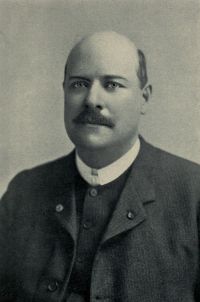
Charles Cornwallis

Definition and stakes

Stanley Lane-Poole,  Dictionary of National Biography… (1887)

“ CHESNEY, CHARLES CORNWALLIS (1826–1876) , brevet-colonel royal engineers, was a nephew of General Francis Rawdon Chesney [q. v] , in whose house he was born, and to whom he owed his first advance in life. He was the son of another Charles Cornwallis Chesney, who had been a captain in the East India Company's Bengal artillery until ill-health obliged him to return to England, where he died in 1830. The younger Charles Cornwallis was born near Kilkeel, in county Down, on 29 Sept. ”
Source: Wikisource

1911 Encyclopædia Britannica, Volume 7… (1911)

“ On the 17th of July a general amnesty was proclaimed, and a few weeks afterwards the French army under Humbert was surrounded and forced to surrender. In 1801 Cornwallis was replaced by Lord Hardwicke, and soon after he was appointed plenipotentiary to negotiate the treaty of Amiens (1802) . In 1805 he was again sent to India as governor-general, to replace Lord Wellesley, whose policy was too advanced for the directors of the East India Company. ”
Source: Wikisource

Sidney Lee,  Dictionary of National Biography… (1887)

“ CORNWALLIS, Sir CHARLES (d. 1629) , courtier and diplomatist, second son of Sir Thomas Cornwallis [q. v.] , controller of Queen Mary's household, who had been imprisoned by Elizabeth in 1570, was probably born at his father's house of Brome Hall, Suffolk. Nothing is known of him till 11 July 1603, when he was knighted. Early in 1605 he was sent as resident ambassador to Spain. ”
Source: Wikisource

Get perspective with Kwize: daily news enlightened by great literature