Commentarii de Bello Gallico

Definition and stakes

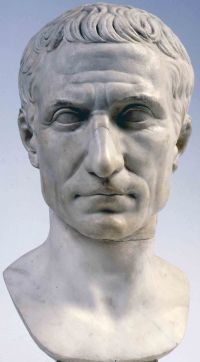
Portrait of Julius Caesar Julius Caesar,  "De Bello Gallico" and Other Commentaries

“ XIII.—Throughout all Gaul there are two orders of those men who are of any rank and dignity: for the commonality is held almost in the condition of slaves, and dares to undertake nothing of itself and is admitted to no deliberation. The greater part, when they are pressed either by debt, or the large amount of their tributes, or the oppression of the more powerful, give themselves up in vassalage to the nobles, who possess over them the same rights without exception as masters over their slaves. But of these two orders, one is that of the Druids, the other that of the knights. ”

Source: Gutenberg

Portrait of Julius Caesar Julius Caesar,  "De Bello Gallico" and Other Commentaries

“ The rest instantly send ambassadors to Caesar; and requested that he would be contented with that punishment of his enemy, which if he had possessed the power to inflict on them before the engagement, when they were yet uninjured, they were persuaded from his usual clemency and mercy, he never would have inflicted; that the power of the Bellovaci was crushed by the cavalry action; that many thousands of their choicest foot had fallen, that scarce a man had escaped to bring the fatal news. ”
Source: Gutenberg

Portrait of Julius Caesar Julius Caesar,  "De Bello Gallico" and Other Commentaries

“ Ambassadors flock in from the other states, which were waiting for the issue of the [war with the] Bellovaci: they give hostages, and receive his orders; all except Comius, whose fears restrained him from entrusting his safety to any person's honour. For the year before, while Caesar was holding the assizes in Hither Gaul, Titus Labienus, having discovered that Comius was tampering with the states, and raising a conspiracy against Caesar, thought he might punish his infidelity without perfidy ”
Source: Gutenberg

Get perspective with Kwize: daily news enlightened by great literature