Concord grape

Definition and stakes

U. P. Hedrick,  The Grapes of New York

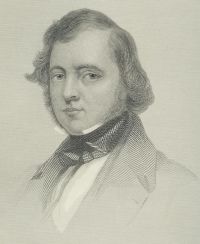
“ He will long be remembered by grape-growers as the originator and introducer of the Concord grape, the history of which is given in the above account of that variety. Bull grew many other seedlings, none of which attained a reputation among growers unless it be Cottage. Ephraim Bull’s ninety years were spent in the quiet of his Concord home and he would have remained unknown by others than his neighbors, who honored and loved him, had it not been for his fortunate discovery of the Concord grape, which must always give him a place in the history of American grape culture. ”

Source: Gutenberg

U. P. Hedrick,  The Grapes of New York

“ The dominance of Concord is not wholly desirable for viticulture, as by keeping out better varieties, the consumer is prevented from obtaining grapes high in quality; and by giving the grower a feeling of sufficiency in having this sort, other varieties do not receive the consideration they deserve. The variety is used somewhat for making red wines and a white wine as a base for champagne but it is a poor wine grape, as much sugar must be added to attain the amount of alcohol necessary for a good wine and the foxy taste is not a pleasant flavor. ”
Source: Gutenberg

U. P. Hedrick,  Manual of American Grape-Growing

“ The writer, in 1906, made a canvass of the region, vineyard by vineyard, and found that 90 per cent of the acreage of the belt was set to Concord, 3 per cent to Niagara, 2 per cent to Worden and the remaining 5 per cent to a dozen or more varieties of which Moore Early and Delaware led.
The manufacture of grape-juice on a commercial scale began in the Chautauqua belt and most of this product is still produced in the region. Here, only Concord grapes of the best quality are used for grape-juice. The growth of this industry is most significant for the future of grape-growing in the region.
”
Source: Gutenberg

Get perspective with Kwize: daily news enlightened by great literature