Cumaná

Definition and stakes

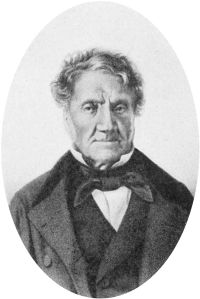
Portrait of Aimé Bonpland Aimé Bonpland,  Personal Narrative of Travels to the Equinoctial Regions of America…

“ A vague desire to revisit that spot remains rooted in their minds to the most advanced age. Cumana and its dusty soil are still more frequently present to my imagination, than all the wonders of the Cordilleras. Beneath the bright sky of the south, the light, and the magic of the aerial hues, embellish a land almost destitute of vegetation. ”
Source: Gutenberg

Sir Richard Henry Bonnycastle,  Spanish America, Vol. 2 (of 2)

“ The other towns of Cumana are chiefly missionary establishments seated near the rivers, and on the great plains, the greater part of the country being yet in a state of nature. Of these towns the principal one is Cumanacoa, twelve leagues distant from Cumana, on a plain surrounded with lofty mountains, which was founded in 1717, by Domingo Arias, on his return from the Guaripiche river, where some Frenchmen had attempted to plant a colony; it was at first called San Baltazar de las Arias, but soon lost that appellation, for its present one. ”
Source: Gutenberg

Sir Richard Henry Bonnycastle,  Spanish America, Vol. 2 (of 2)

“ The women, particularly the Indians, are very prolific, which in some measure compensates for the loss annually experienced of the younger branches of society. The population of Cumana amounts at present to 16, or 17,000 souls, of which, two-fifths are Indians of the Guayqueria, Chayma, and other tribes. Of these, the Guayquerias are the most noted tribe not only of Cumana, but of Caraccas; they are a branch of the Guarounoes, who inhabit the swampy island, at the mouth of the Orinoco ”
Source: Gutenberg

Get perspective with Kwize: daily news enlightened by great literature