Sucre

Definition and stakes

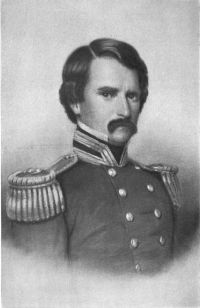
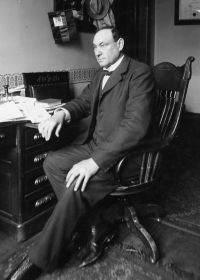
Portrait of Lardner Gibbon Lardner Gibbon,  Exploration of the Valley of the Amazon…

“ Our mules suddenly turn gray by frost formed on the ends of their hair. The clouds are forming, and we seat ourselves under their cool shade to breakfast, with a snow-capped mountain above, and far below the valley and city in full view. The farther side of the valley appears tilted up out of its level; beyond are the everlasting mountains.
The road through those hills leads south to the capital Sucre, with a population of 19,235. Sucre was founded by the title of "La Plata," silver, in a district known in the early days of the Spaniards as "Charcas."
”
Source: Gutenberg

Friedrich Kluge,  An Etymological Dictionary of the German Language (1891)

“ Zucker, masculine, ‘sugar,’ from the corresponding Middle High German zucker, zuker, masculine (Old High German zucura, once only) ; compare the corresponding Dutch suiker, Middle English sucre, English sugar, Icelandic sẏkr, Danish sukker, Swedish socker. The word was borrowed from Middle Latin zucara, which is derived in the first instance from Arabic sokkar, assokhar; from the same source the Romance class French sucre and Italian zucchero are obtained. Spanish azúcar was directly adopted from the Arabs, who cultivated the sugarcane in Spain. ”
Source: Wikisource

1911 Encyclopædia Britannica, Volume 26… (1911)

“ Sucre is the seat of the archbishop of La Plata and Charcas, the primate of Bolivia. It is not a commercial town, and its only noteworthy manufacture is the “clay dumplings” which are eaten with potatoes by the inhabitants of the Bolivian uplands. Although the capital of Bolivia, Sucre is one of its most isolated towns because of the difficult character of the roads leading to it. ”
Source: Wikisource

Get perspective with Kwize: daily news enlightened by great literature