Parsnip

Definition and stakes

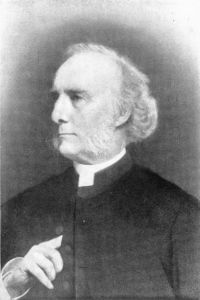
Portrait of Isabella Beeton Isabella Beeton,  Mrs. Beeton's Book of Household Management (1907)

“ The cultivated parsnip is much used, and is a highly nutritious vegetable. In times of scarcity, an excellent bread has been made of its roots, and they also furnish an excellent wine, resembling the malmsey of Madeira and the Canaries; a spirit is also obtained from them in as great quantities as from carrots. The composition of the parsnip-root has been found to be in 100 parts, 79.4 of water, 6.9 starch and fibre, 6.1 gum, 5.5 sugar, and 2.1 of albumen. ”
Source: Wikisource

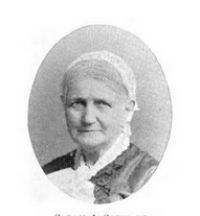
Portrait of Mrs. H. W. Beecher Mrs. H. W. Beecher,  Motherly talks with young housekeepers (1873)

“ The Parsnip is also a native of Britain, and largely used, not only for soups and garnishing dishes, but as a vegetable; or, dipped in a batter of butter, flour, and white of eggs, it is fried a delicate brown, and sent to the table as a side-dish. During Lent, it is much eaten with fish. It is even sweeter than the carrot,—much too sweet to please all tastes. Like the carrot, it is excellent in soups, and is sometimes made into bread. A kind of wine, said to resemble the Malmsley wine of Madeira, can be made from the parsnip. ”
Source: Gutenberg

Lucia Chase Bell,  All the World Over: Interesting Stories of Travel… (1892)

“ Then she sat down on the grass and laughed.
She picked him up; and the moment she touched him there was an awful transformation. Even Dimple saw it was only a parsnip,—a pronged, ill-shaped, tough old parsnip.
But that night something happened which Dimple never forgot. The old Parsnip-Man came to his bed and spoke to him. But I regret to say that he used many large words which Dimple could not understand.
“Kind sir,” said he, “naturally we are a fine and shapely race,—we, and our cousins the Beets and the Carrots and the Salsify.
”
Source: Gutenberg

Get perspective with Kwize: daily news enlightened by great literature