Summary

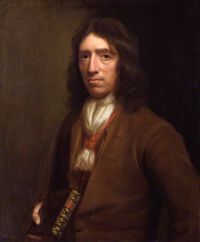
Portrait of William Dampier William Dampier A Voyage to New Holland, Etc. in the Year 1699

This morning, August the first, as we were standing in, we saw several large seafowls, like our gannets on the coast of England, flying 3 or 4 together; and a sort of white seamews, but black about the eyes, and with forked tails. We strove to run in near the shore to seek for a harbour to refresh us after our tedious voyage; having made one continued stretch from Brazil hither of about 114 degrees designing from hence also to begin the discovery I had a mind to make on New Holland and New Guinea.
Source: Gutenberg

Portrait of William Dampier William Dampier A Voyage to New Holland, Etc. in the Year 1699

The Canary Islands are, for their latitude, within the usual verge of the true or general tradewind; which I have observed to be, on this side the equator, north-easterly: but then, lying not far from the African shore, they are most subject to a north wind, which is the coasting and constant trade, sweeping that coast down as low as to Cape Verde; which, spreading in breadth, takes in mostly the Canary Islands; though it be there interrupted frequently with the true tradewind, north-west winds, or other shifts of wind that islands are subject to; especially where they lie many together.
Source: Gutenberg

Portrait of William Dampier William Dampier A Voyage to New Holland, Etc. in the Year 1699

The land is of an indifferent height, so that it may be seen 9 or 10 leagues off. It appears at a distance very even; but as you come nigher you find there are many gentle risings, though none steep nor high. It is all a steep shore against the open sea: but in this bay or sound we were now in the land is low by the seaside, rising gradually in within the land. The mould is sand by the seaside, producing a large sort of samphire, which bears a white flower.
Source: Gutenberg

Get perspective with Kwize: daily news enlightened by great literature