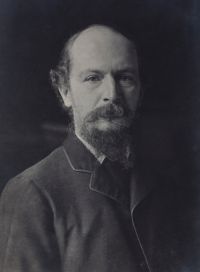
Earl of Glencairn

Definition and stakes

1911 Encyclopædia Britannica, Volume 12… (1911)

William, the 9th earl (c. 1610–1664) , a somewhat lukewarm Royalist during the Civil War, was a party to the “engagement” between the king and the Scots in 1647; for this proceeding the Scottish parliament deprived him of his office as lord justice-general, and nominally of his earldom. In March 1653 Charles II. commissioned the earl to command the Royalist forces in Scotland, pending the arrival of General John Middleton, and the insurrection of this year is generally known as Glencairn’s rising.
Source: Wikisource

Various Encyclopaedia Britannica, 11th Edition…

Made a lord of the Scottish parliament as Lord Kilmaurs not later than 1469, Cunningham was created earl of Glencairn in 1488; and a few weeks later he was killed at the battle of Sauchieburn whilst fighting for King James III. against his rebellious son, afterwards James IV. His son and successor, Robert (d. c. 1490) , was deprived of his earldom by James IV., but before 1505 this had been revived in favour of Robert’s son, Cuthbert (d. c. 1540) , who became 3rd earl of Glencairn, and whose son William (c. 1490-1547) was the 4th earl.
Source: Gutenberg

Portrait of John Galt John Galt Ringan Gilhaize, or, The Covenanters

When my grandfather had, in the manner rehearsed, disposed of those sisters of simplicity in the Kirkgate of Irvine, he returned back in the afternoon to the Earl of Glencairn at Eglinton Castle to report what he had done; and his Lordship again, in a most laudatory manner, commended his prudence and singular mildness of nature, mentioning to the Earl and Countess of Eglinton, then present with him, divers of the missions wherein he had been employed, extolling his zeal, and above all his piety.
Source: Gutenberg

Get perspective with Kwize: daily news enlightened by great literature