Earth's rotation

Definition and stakes

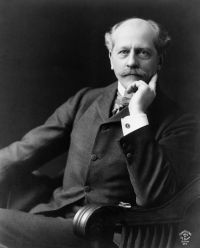
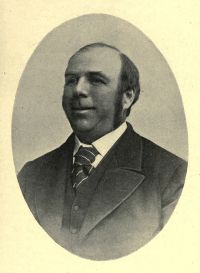
Portrait of Robert S. Ball Robert S. Ball,  The Earth's Beginning

“ It therefore follows that the energy withdrawn from the earth-moon system is not to be obtained at the expense of the revolution of the moon.
The energy must therefore be obtained at the expense of the rotation of the earth on its axis. But if this be the case, the speed with which the earth rotates must be diminished; that is to say, the length of the day must be increased. And if the speed of the earth’s rotation be reduced, that means that the amount of moment of momentum contributed by the earth is lessened.
”
Source: Gutenberg

Portrait of George Biddell Airy George Biddell Airy,  Popular Astronomy: A Series of Lectures Delivered at Ipswich (1881)

“ Therefore, we must make the following supposition: that if the earth does turn round the sun, its axis of rotation remains parallel to itself, having no reference whatever to the sun, whilst the earth is going round the sun; or, to express it in other words—that the earth has the power of preserving its axis of rotation in the same position all the time. Now, it is remarkable, as a mechanical fact, that nothing is so permanent in nature as the axis of rotation of anything which is rapidly whirled. We have examples of this in every-day practice. The first is the motion of a boy's hoop. ”
Source: Wikisource

Get perspective with Kwize: daily news enlightened by great literature