“ Edred looked in the eyes of the Mouldiestwarp and saw that they were no longer a mole's eyes but were like the eyes of all the dear people he had ever known, and through them the soul of all the brave people he had ever read about looked out at him and said, "Courage, Edred. Be one of us." ”
Edred
Definition and stakes
Edred, a recurring figure in literature, represents the journey of a young protagonist navigating moral and historical turning points. E. Nesbit’s The House of Arden depicts him as a spirited child facing trials such as imprisonment and self-discovery, merging adventure with themes of bravery and compassion.
Gilbert Abbott À Beckett, in The Comic History of England, mentions Edred more briefly, situating him within a historical narrative. Other writers, from Mrs. Loudon to Charles Oman, engage with Edred’s legacy across diverse contexts, ranging from children’s fiction to academic analysis. These portrayals together emphasize Edred as a symbol of evolving identity, linking personal development with historical continuity.
Quotes about “Edred”
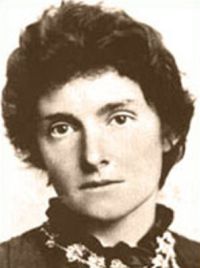
E. Nesbit,
The House of Arden — CHAPTER IX. The Prisoners in the Tower
(1908)
“ Edred asked."It is not my birthday," said the gentleman smiling. "But why the question?""Because you're so grand," said Edred. "I suppose you're a prince then?""No, not a prince—a prisoner.""Oh, I see," said Edred, as people so often do when they don't; "and you're going to be let out to-day, and you've put on your best things to go home in. I am so glad. ”
E. Nesbit,
The House of Arden — CHAPTER II. The Mouldiwarp
(1908)
“ Don't you be nasty to each other for a whole day, and then—""You needn't talk," said Edred, still under his breath."Very well," said the mole, whose ears were sharper than his eyes. "I won't.""Oh, don't!" sighed Elfrida; "what is it we are to do when we've been nice to each other for a whole day?""Well, when you've done that," said the mole, "look for the door.""What door?" asked Elfrida."The door," said the mole."But where is it?" Edred asked."In the house it be, of course," said the mole. "Where else to gracious should it be?" ”
E. Nesbit,
The House of Arden: A Story for Children
“ He was a brown-faced, sturdy, sailor-looking man, with a short pigtail sticking out from the back of his head like the china handle of a Japanese teapot.“Oh, yes,” said Elfrida, and Edred did not say “Oh, no.”“Then just you wait till I’m out of sight, and then come down the way you see me go. Go long same as if you was after butterflies or the like—a bit this way and a bit that—see?” said the man. And they obeyed.Alas! too few children in those uninteresting times of ours have ever been in a smuggler’s cave. To Edred and to Elfrida it was as great a novelty as it would be to you or to me. ”
E. Nesbit,
The House of Arden: A Story for Children
“ It is always difficult to remember exactly where one is when one happens to get into a century that is not one’s own.Edred would have liked to stay all day watching the busyness of every one and the beautifulness of the horses, but Elfrida dragged him away.They had to find the witch, she reminded him; and in a dreadful tumble-down cottage, with big holes in its roof of rotten thatch, they did find her. ”
E. Nesbit,
The House of Arden: A Story for Children
“ Perhaps I had better begin this chapter by telling you exactly how Edred “got even with old Parrot-nose,” as he put it. You will remember that Master Parados was the Ardens’ tutor in the time of King James I., and that it was through his eavesdropping and tale-bearing that Edred and Elfrida were imprisoned in the Tower of London. There was very little time in which to get even with any one, and, of course, getting even with people is not really at all a proper thing to do. ”
E. Nesbit,
The House of Arden — CHAPTER II. The Mouldiwarp
(1908)
“ What's the real poetry like?" "'The mole, the mole, He lives in a hole. The mole is blind; I don't mind,'" said Edred sulkily. "Auntie told me it the day you went to her with Mrs. Harrison.""I'm sure you ought to make it up all your self. You see, the mole doesn't come.""There isn't any mole," said Edred."Let's both think hard. I'm sure I could make poetry—if I knew how to begin.""If any one's got to make it, it's me," said Edred. "You're not Lord Arden.""You're very unkind," said Elfrida, and Edred knew she was right. ”
E. Nesbit,
The House of Arden: A Story for Children
“ They saw themselves in blue silk and lace and black velvet, and they saw on their own faces fear and love, and the wonder what was to happen next. They saw themselves embraced by the grown-ups, who were quite plainly father and mother—they saw themselves speak, and the grown-ups reply.“I’d give all my pocket-money for a year to hear what they’re saying,” Edred told himself.“That daddy’s just like my daddy,” Elfrida was telling herself; “and just like the daddy in the Tower that was so like my own daddy.” ”
Gilbert Abbott À Beckett,
The Comic History of England
“ Edred soon died, and left the kingdom to his little brother Edwy, a lad of fifteen, who soon married Elgiva, a young lady of good family, and took his wife's mother home to live with them. On the day of his coronation he had given a party, and the gentlemen, including Odo, Archbishop of Canterbury, and Dunstan, the monk, were still sitting over their wine, when Edwy slipped out to join the ladies. ”
E. Nesbit,
The House of Arden: A Story for Children
“ Parados’s knuckle-rappings and scowlings, I do not know. But it is certain that this adventure was the beginning of the change in Edred which ended in his being “brave and kind and wise” as the old rhyme had told him to be.“And now,” said the nurse, as Elfrida appeared in her girl’s clothes, “there is not a moment to lose. Already at the Tower they have found out our trick. You must go back to your own times.”“She’s the witch,” Edred briefly answered the open amazement in Elfrida’s eyes.“There is no time to lose,” the nurse repeated. ”
E. Nesbit,
The House of Arden — CHAPTER XII. Films and Clouds
(1908)
“ I believe they like us because we're Ardens. Or is it because Edred's a lord?""We must find the treasure," said Edred, looking as he always did when he was very much in earnest, so like his father that Aunt Edith could hardly bear it—"so as to be able to look after our people properly.""And to kick out the Tallow King," said Elfrida."But you won't be discontented if you don't find it," said Aunt Edith. "It's only a sort of game really. No one I ever knew ever found a treasure. And think what we've found already! Arden Castle instead of Sea View Terrace—and the lodgers. Good-night, chicks." ”
“ True was praised much, but Edred more. Why had no one else thought of putting the dog on the scent? Edred said that it was mostly True's doing. And the people praised his modesty. [274] And nobody, except perhaps Elfrida, ever understood what it had cost Edred to go that night through the dark and rescue his cousin.Edred's father and Mrs. Honeysett agreed that Edred had done it in the delirium of a fever, brought on by his anxiety about his friend and playmate. People do, you know, do odd things in fevers that they would never do at other times. ”
Charles Oman, Albert Pollard, Samuel Gardiner, Spencer Walpole and Hugh Chisholm, 1911 Encyclopædia Britannica (1911)
“ It is notable that when, after Edred’s death, there was civil strife, owing to the quarrel of his nephew Edwy with some of his kinsmen, ministers and bishops, the rebels, who included the majority of the Mercians and Northumbrians, set up as their pretender to the throne not a Dane but Edwy’s younger brother Edgar, who ruled for a short time north of Thames, and became sole monarch on the death of his unfortunate kinsman. ”
E. Nesbit,
The House of Arden: A Story for Children
“ Edred and Elfrida would have liked something more subtle, but there was no time to think of anything.“I know where there are shovels,” said Richard, “if they’ve not got mixed up in the dream.”“I say,” said Edred slowly, “I’d like to write that down about Kent, and see if it’s right afterwards.”There was a quill sticking out of the pewter inkstand on the table where they were used to do their lessons. But no paper.“Here, hurry up,” said Cousin Richard, and pulled a paper out of the front of his doublet. “I’ll write it, shall I?” ”
Evelyn Everett-Green, The Secret Chamber at Chad
“ Knowing so much, need we ask more? With Him rests the judgment of all mankind. He alone can read the heart. Let that thought be enough for us. Whether the sin of heresy is as vile in His eyes as in those of man, He alone knows; we do not. Let us strive for our own part to keep the unity of the faith in the bond of peace, and leave all else to Him."As he spoke, Brother Emmanuel gently closed the book, as though to close the discussion likewise; and Edred, looking up and round about him, drawing a long breath meantime, suddenly gave a start, which attracted the attention of his preceptor. ”
E. Nesbit,
The House of Arden — CHAPTER II. The Mouldiwarp
(1908)
“ The mole paused."I've got to let you find me again. Don't upset yourself," it said bitterly. "When you wants me, come up on to the knoll and say a piece of poetry to call me, and I'll come," and it started again."But what poetry?" Edred asked."Oh, anything. You can pick and choose."Edred thought of "The Lays of Ancient Rome.""Only 'tain't no good without you makes it up yourselves," said the Mouldiwarp."Oh!" said the two, much disheartened."And course it must be askin' me to kindly come to you. Get along home.""Where are you going?" Elfrida asked. ”
E. Nesbit,
The House of Arden: A Story for Children
“ I’ll give you that note-book of mine with the lead-pointed mother-of-pearl pencil, and we’ll go round to all the cottages and find out which are leaky, so as to be ready to patch them up when we’ve got the treasure.”“I don’t want to be good,” said Edred bitterly. “I haven’t quarrelled and put everything back, but I’m going to now,” he said, with determination. “I don’t see why everything should be smashed up and me not said any of the things I want to say.”“Oh, don’t!” cried Elfrida; “it’s bad enough to quarrel when you don’t want to, but to set out to quarrel! Don’t!” ”
A. D. Crake, Edwy the Fair or the First Chronicle of Aescendune
“ Edred, the reigning king of England, was the brother of the murdered Edmund, and, in accordance with the custom of the day, had ascended the throne on the death of his brother, seeing that the two infant sons of the late king, Edwy and Edgar, were too young to reign, and the idea of hereditary right was not sufficiently developed in the minds of our forefathers to suggest the notion of a regency. ”
E. Nesbit,
The House of Arden — CHAPTER IX. The Prisoners in the Tower
(1908)
“ Mr. Parados was very severe, and rapped Edred's knuckles almost continuously during lesson-time, and out of it; said Cousin Richard, "He is for ever bent on spying and browbeating of us.""He's always messing about—nasty sneak," said Edred. "I should like to be even with him before I go. And I will too.""Before you go? Go whither?" Cousin Richard asked."Elfrida and I are going away," Edred began, and then felt how useless it was to go on, since even when the 1908 Edred—who he was—had gone, the 1605 Elfrida and Edred would of course still be there—that is if . . . ”
Anonymous, Cassell's History of England, Vol…
“ Thus died Edmund in 946, in the twenty-fourth year of his age, and the sixth of his reign. By Elgiva, his wife, he had two sons, Edwy and Edgar, who did not succeed him, on account of their minority; Edred, his brother, being placed on the throne by the unanimous election of the Witena-gemot. His glorious deeds had deservedly gained for Edmund the title of "Magnificent."Edred was a mere youth when he succeeded to the crown, a circumstance which the Northumbrians were not slow to take advantage of, and instantly attempted to throw off their allegiance ”
A. D. Crake, Edwy the Fair or the First Chronicle of Aescendune
“ Edwy, King of England, and Elgiva, his queen, gave a great feast at their royal palace in London, a month after the events recorded in our last chapter; and a numerous company had assembled to do honour to their hospitality. Yet the company was very different from that which had assembled round the same hospitable board in the days of King Edred. First, the Churchmen were conspicuous by their absence; and secondly, all the old grey-headed counsellors, who had been the pride and ornament of the reigns of Edmund and Edred, were not seen ”
Evelyn Everett-Green, The Secret Chamber at Chad
“ But let us make all haste, for no man knows when the bloodhounds may be upon us to strive to take him away."Edred's face was very pale, but steady and resolved. He understood, better perhaps than his younger brother, the peril of the enterprise upon which they had embarked. But he did not shrink from that one whit, only he did hope and trust that his father would never be implicated by their conduct; for if, after all, the priest were to be found hidden within the precincts of Chad, it was easy to prophesy a great reverse of fortune to all who dwelt therein. ”
Compton MacKenzie,
Rich Relatives
“ Jasmine supposed it might be tactless to observe that Edred showed no signs of heartbreak, and instead of commenting she enquired sympathetically what Ethelred was going to do."Ah, poor Ethelred's a great problem. He wants to be an engineer, and really he is very clever with his fingers; but his father is quite opposed to anything in the nature of technical education until he's had an ordinary education. ”
Allen Mawer,
1911 Encyclopædia Britannica
(1911)
“ After the brief rule of Anlaf Cuaran in Northumbria, Eric was once more restored, probably in 950, only to be expelled again in 953 or 954, when Edred took the Northumbrian kingdom into his own hands. In the same year Wulfstan was liberated and appointed to the Mercian bishopric of Dorchester. Edred died on the 23rd of November 955 at Frome, in Somersetshire, and was buried in the old minster at Winchester. During the whole of his life Edred was troubled by ill-health, a fact which may help to explain some of the more passionate acts of violence attributed to him. ”
E. Nesbit,
The House of Arden — CHAPTER III. In Boney's Times
(1908)
“ Lord Arden led Edred and Elfrida away, one in each hand, and as he went he was very severe on disobedient children who went straying after wicked witches, and they could not defend themselves without blaming the cook, which, of course, they would not do. ”
Evelyn Everett-Green, The Secret Chamber at Chad
“ Hast not heard as much? There be spies from the priory posted round and about. All the gates are watched. Edred thinks it is to strive to seize Brother Emmanuel should he venture forth from the shelter of the walls."I like not the thought of all those prying eyes. My husband, these be strange times in which we dwell."Sir Oliver's face was dark and thoughtful."Ay, verily they be. How can men wonder that the ignorant and unlearned turn with loathing and scorn from such crooked and cowardly ways?--"How now, Julian? Hast learned the cause of this ado? What says the lay brother? ”
A. D. Crake, Edwy the Fair or the First Chronicle of Aescendune
“ But a few days had passed before Elfric learned the secret of Redwald’s influence over the young prince. The household of Edred was conducted with the strictest propriety.ix All rose with the lark, and the first duty was to attend at the early mass in the royal chapel. Breakfast followed, and then the king on ordinary days gave the whole forenoon to business of state, and he thought it his duty to see that each member of the royal household had some definite employment, knowing that idleness was the mother of many evils. ”
Hezekiah Butterworth,
Zigzag Journeys in Northern Lands…
“ In the reign of Ethelred Dunstan died. As he had used politics to help the church, he was made a saint. This was in a rude and ignorant age.Poor boy kings! Edmund was murdered; Edwy died of a broken heart; Edward was stabbed and dragged to death at his horse’s heels; and Ethelred lost his kingdom. Three of them were good and three were bad. Only one of them was happy.Edmund, eighteen years of age, reigned from 940 to 946; Edred, 946 to 955; Edwy, fifteen years of age, 955 to 958; Edgar, fifteen years of age, 958 to 975; Edward, thirteen years of age, 975 to 979 ”
Allen Mawer,
1911 Encyclopædia Britannica
(1911)
“ This marriage was probably an irregular one. (2) To Ælflæd, by whom he had two sons—Ælfweard, who died a fortnight after his father, and Eadwine, who was drowned in 933—and six daughters, Æthelflæd and Æthelhild nuns, and four others (see Æthelstan) . (3) To Eadgifu, the mother of Kings Edmund and Edred, and of two daughters. ”
Anna Bartlett Warner,
Karl Krinken, His Christmas Stocking
“ It was rather a sad smile that the old man gave him, and yet it was very tender.“‘My dear Edric,’ he said, ‘never say, when I am a man I will do good. There is hardly any kind of good work that a child may not help forward, or help to keep back. Will you wait till you are a man, Edric, before you begin to love Christ?’“‘I think I do love him now, grandfather,’ said Edric. ”
A. D. Crake, Alfgar the Dane or the Second Chronicle of Aescendune
“ For in his eyes it was Edric, and none but Edric, who had done this deed.But a terrible suspicion of a very opposite nature was rapidly assuming sway in other men's minds.A council met before daybreak--the reeve or mayor, the chief burgesses, two or three thanes then in the town, the officers of the royal guard, Elfwyn, Herstan, and Edric. After a few preliminaries Edric rose and spake as follows:"We have met together under the most awful responsibility which could fall upon subjects. Edmund, our king, has been murdered, and by whom we know not." ”