Egfrid of Northumbria

Definition and stakes

Saint the Venerable Bede Bede's Ecclesiastical History of England

Here Bede strangely omits important events. On Wilfrid's return to Northumbria he was accused of having procured his acquittal by bribery and was imprisoned for nine months, first at Bromnis (unidentified) and then at Dunbar. Being released at the request of Aebba, Abbess of Coldingham (v. IV, 19, 25) , who was Egfrid's aunt, he went first to Mercia and then to Wessex, but was expelled from both provinces. Egfrid's sister Osthryth was the wife of Ethelred of Mercia, and in Wessex the king, Centwine, had married a sister of the Northumbrian queen, Eormenburg.
Source: Gutenberg

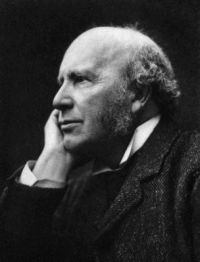
Portrait of Thomas Hodgkin Thomas Hodgkin The history of England, from the earliest times to the Norman Conquest (1906)

The twenty years’ reign of Aldfrid (685–705) was marked by few striking events. Northumbria, as we have seen, was now shorn of her greatness and was no longer the leading power in Britain. It was probably as much as Aldfrid could do to preserve his weakened and diminished kingdom from conquest by its Pictish and Mercian neighbours. It will suffice briefly to indicate the further fortunes of the three great Churchmen whose lives had been of late so closely intertwined with that of Egfrid.
Source: Gutenberg

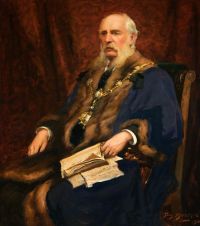
Edward Lewes Cutts Parish Priests and Their People in the Middle Ages in England

In the fen country of the Girvii, between Mercia and East Anglia, the two kings, Peada of Mercia, and Oswy of the East Angles, concurred in the foundation of a monastery at Medeshamsted (Peterborough, 655) , and this was followed by the foundation of Croyland (716) and Thorney (682) . When Etheldreda, the daughter of Anna, King of the East Angles, and virgin wife of Egfrid of Northumbria, at length obtained her husband’s leave to enter upon the religious life, she built herself a double monastery on her own estate in the Isle of Ely (673) .
Source: Gutenberg

Get perspective with Kwize: daily news enlightened by great literature