Gulf of Finland

Definition and stakes

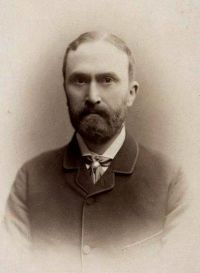
Portrait of John Scott Keltie John Scott Keltie Encyclopædia Britannica, Ninth Edition (1879)

The intricate archipelago of islets and granite and limestone rocks in the Bothnian gulf renders the navigation extremely dangerous. The lakes occupy about 12 per cent. of the area, the marshes 20 per cent., so that Finland is more abundantly supplied with water than any other country in the world. The land appears to have been formerly a sea-bed, which was gradually elevated and is still rising at the rate of about 3.4 feet on the Gulf of Bothnia, and 1.9 feet on the Gulf of Finland in a hundred years.
Source: Wikisource

Anonymous Sasha the serf, and other stories of Russian life (1882)

As the clouds grew darker, the wind blew in louder gusts, and the waves rose with whiter and taller crests, and lashed the shores with an ever-increasing vehemence. Along the beach on the north side of the Gulf of Finland are some twenty or thirty fishermen's huts, which form part of the straggling town of Lachta. Hard by is the spot where a ferry-boat starts—or rather started a century ago—for the opposite side of the gulf some twice or three times a week.
Source: Gutenberg

The American Cyclopædia — Finland…

Petersburg, flow into the gulf of Finland, the first by the river Svir into Lake Ladoga, and the latter by the Neva into the bay of Cronstadt. The bed of the gulf is of calcareous rock, in some parts compact and naked, in others covered and filled with shells. Occasional points of granite are intermingled with this general character. The depth of water is nowhere great, and is least along the southern coast, of which the submerged descent is gradual. The northern shore is much hemmed in with islands and granite rocks.
Source: Wikisource

Get perspective with Kwize: daily news enlightened by great literature