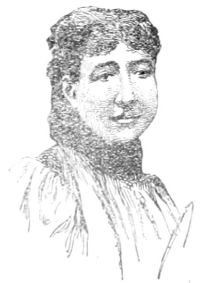
Henrietta Maria of France

Definition and stakes

1911 Encyclopædia Britannica, Volume 13… (1911)

In the next year the queen effected her passage to the Continent. In February 1643 she landed at Burlington Quay, placed herself at the head of a force of loyalists, and marched through England to join the king near Oxford. After little more than a year’s residence there, on the 3rd of April 1644, she left her husband, to see his face no more. Henrietta Maria found a refuge in France. Richelieu was dead, and Anne of Austria was compassionate. As long as her husband was alive the queen never ceased to encourage him to resistance.
Source: Wikisource

Isabel Shepperson Battles of Destiny

Queen Henrietta Maria was not present at the scenes of acclamation which welcomed the return of her son, Charles II. She was at that time happily absorbed in the forth-coming marriage of her charming daughter, the Princess Henriette Maria, to Philip, Duke of Orleans, brother of Louis XIV.
Some time later Queen Henrietta Maria went to England. She resided there three years, but her heart’s best interests were in sunny France where her idolized daughter, the Duchess of Orleans, moved amid the gay court of Versailles as its chief honor and ornament.
Source: Gutenberg

James Wood The Nuttall Encyclopædia — H

W. of London; the river is spanned here by a fine five-arch bridge, and the annual amateur regatta is a noted social event; malting and brewing are the chief industries.
Henotheism, a polytheism which assigns to one god of the pantheon superiority over the rest.
Henrietta Maria, wife of Charles I., born at the Louvre; daughter of Henry IV. of France and of Marie de Medicis; a beautiful and able woman, much beloved, and deservedly so, by her husband, but from her bigotry as a Roman Catholic disliked and distrusted by the nation, not without good reason
Source: Wikisource

Get perspective with Kwize: daily news enlightened by great literature