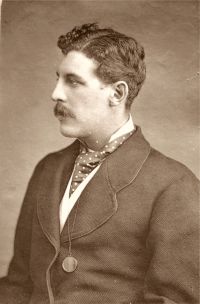
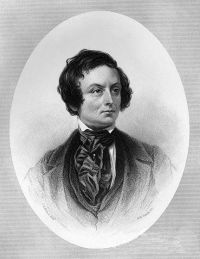
“ Among the patriots no one [Pg 7] was more deeply imbued with this sublime spirit, nor partook more largely of the generous enthusiasm it excited, than Henry Ireton, whose inflexible virtue, after the apparent defection of Cromwell, formed the basis on which rested the darling hopes of all the virtuous and enlightened reformers of his day. ”
Henry Ireton
Definition and stakes
Henry Ireton (1611–1651) was an English Parliamentarian general and politician during the Wars of the Three Kingdoms, notable as Oliver Cromwell’s son-in-law. His military career, distinguished by campaigns in England and Ireland, and his political push for a constitutional monarchy, placed him at the center of 17th-century upheaval.
Authors like Thomas Bailey praised his "inflexible virtue," while Joel Munsell noted his death during the Siege of Limerick and posthumous execution. Mary Louisa Boyle emphasized his dual role as soldier and statesman, and Marjorie Bowen portrayed him in fiction as a figure of moral duty. These varied perspectives underscore his complex legacy as a pivotal yet contested figure in England’s turbulent history.
Quotes about “Henry Ireton”
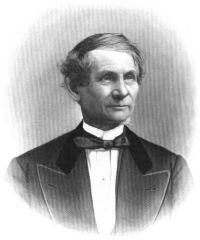
Joel Munsell,
The Every Day Book of History and Chronology
“ Edward Alleyn died; an actor of great reputation in the reigns of Elizabeth and James I, and founder of Dulwich college.1651. Henry Ireton, a republican general in the English civil war, died. He possessed great abilities and uncommon valor, and deserved the friendship of Cromwell, whose daughter he married. He died at the siege of Limerick, and was buried with great pomp in Westminster abbey; but at the restoration was dug up and exposed on Tyburn gibbet with Cromwell and Bradshaw.1687. Nicholas Steno, an eminent Danish anatomist, died. ”
The World's Greatest Books — Volume 05…
“ In the wreck, he had succeeded in saving not only his own life, but the life of a young man named Ireton. Ireton had never forgotten the debt, and now, in the package which Henry had brought over from England, had endeavoured to repay it. He had persuaded the Council that the estates of Penford-bourne had been improperly sequestrated by King Charles, and should be returned to their lawful owner, Lord Langleigh ”
Edmund Goldsmid, Explanatory Notes of a Pack of Cavalier Playing Cards…
“ Ireton was born in 1610, and commanded the left wing of the Parliamentarians at Naseby. He married a daughter of Oliver Cromwell, whom he succeeded as Commander-in-Chief in Ireland, where he died in 1651. ”
Marjorie Bowen,
The Governor of England
“ Is not His hand truly visible amongst us? Surely it would be a very atheist to doubt it. And for what I was about to say, Harry, coming to a plainer matter, my daughter Bridget is marriageable and full of piety and fear of the Lord—a thrifty maiden and one well-exercised in household ways, and if thou hast a mind to this alliance we may celebrate a marriage with the peace."Ireton flushed with pleasure at this undoubted honour; for Oliver Cromwell had become already a considerable man, and after the splendour of to-day's achievements was like to become more considerable still ”
Joseph Hatton,
Henry Irving's Impressions of America
“ Those persons who tell you that Irving’s tastes are not simple, his private life an honor to him, and his success the result of earnestness of purpose, clearness of aim, deep study and hard work, neither know him nor understand how great a battle men fight in England, who cut their way upwards from the ranks, to stand with the highest at head-quarters. ”
Henry Walcott Boynton, Washington Irving
“ With an easy pocket, and a single congenial task for his leisure, it seemed that Irving's last years were certain to be peacefully rounded. Unfortunately his health did not hold; all his former ailments came back upon him, and the "Life of Washington" became an Old Man of the Sea, which one wishes heartily he might have been rid of. A visit to Saratoga in the summer of 1852, and the company of many pretty women, seemed for the moment to lift the years from his shoulders. ”
Joseph Hatton,
Henry Irving's Impressions of America
“ No man was ever more written of or talked about in America than Henry Irving; probably no man was ever more misrepresented as to his art and his life. A monster, according to his enemies; an angel, if you took the verdict of his friends; he was a mystery to untravelled American journalists, and an enigma to the great play-going public of the American cities. They were told that people either loved or hated him at first sight. American tourists even carried home contradictory reports of him, though the majority were enthusiastic in praise of him as an actor and as a man. ”
Joseph Hatton,
Henry Irving's Impressions of America
“ We dash along, over level crossings, past very continental-looking riverside cabarets and rum-shops, under elevated railroads, and up streets that recall Holland, France, Brighton, and Liverpool, until we reach Washington square. The dead leaves of autumn are beginning to hide the fading grass; but the sun is shining gloriously away up in a blue sky. Irving is impressed with the beauty of the city as we enter Fifth avenue, its many spires marking the long line of street as far as the eye can see. The Brevoort House has proved a welcome, if expensive, haven of rest to many a weary traveller. ”
Henry Walcott Boynton, Washington Irving
“ During those seventeen years New York had changed almost beyond recognition in size, in appearance, in the tone of its life; but Irving was delighted with everything and everybody. All that he had to regret was the ordeal of a great public dinner in his honor, at which, after a great deal of preliminary nervousness, he made the one speech of his life. It was a good speech, but [70] he could never be prevailed upon to repeat the experiment. He was always at his worst in a large company. ”
Joseph Hatton,
Henry Irving's Impressions of America
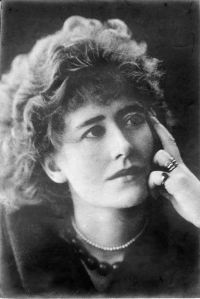
“ Barrett and Florence appear on the “Britannic.” They have got safely out of their boat and have a breezy and contented expression in their eyes. Irving now recrosses the temporary gangway, and is fairly embraced by his two American friends. The band strikes up, “Hail to [49] the Chief!” Then the gentlemen of the press are invited to join Mr. Irving on board the “Yosemite.” They are arrested by what one of them promptly designates “a vision of pre-Raphaelitish beauty.” It is Miss Ellen Terry. [3] Every hat goes off as she comes gayly through the throng. ”
Joseph Hatton,
Henry Irving's Impressions of America
“ The curtain having fallen on the first act, Irving received the honor of a triple call, after which I went to his room, and found him reading some of the numerous cables and telegrams from home, and from several distant American and Canadian cities, wishing him success.“How kind everybody is!” he exclaimed, as he handed me a bundle of despatches. “You should have seen the hundreds of telegrams and letters that were sent to me on board the steamer as I was leaving Liverpool!” ”
Richard Bagwell, Ireland under the Stuarts and During the Interregnum…
“ It was easy for Preston to answer that he fought in a good cause and that Ireton was risking men’s lives in a bad one, while his head and those of his friends were as ‘unsettled on their shoulders as any in the town.’ The mayor and aldermen answered in the same strain; and Ireton died a fortnight after the date of their letter. Ludlow was in Dublin at the moment, and the Commissioners made him commander-in-chief until the pleasure of Parliament should be further known. ”
Henry Walcott Boynton, Washington Irving
“ But after all, as was said of Milton in a different connection, Irving has worn "the garb, but not the clothes, of the ancients." His kinship to them in temper of thought and feeling was closer than his resemblance in manner. Like Addison and Goldsmith, he wins his audience through sheer charm of personality. To open one of his books is like meeting a congenial stranger. You like his looks at first glance, you feel somehow that he likes yours; and while you may be hesitating about advances, he is at your side, and there is nothing more to be said. ”
Richard Bagwell, Ireland under the Stuarts and During the Interregnum…
“ At first the English soldiers were nearly exempt, but suffered equally afterwards; as a punishment, Ireton thought, for trusting in the carnal arm and not giving God the glory. The bishops and the clerical politicians generally do not show to advantage in their disputes with Ormonde, and the narrative of a poor friar is much better worth reading. Having visited in disguise Kilkenny, Ross, and many other places he came to Waterford, where many were dying of the plague. ”
Joseph Hatton,
Henry Irving's Impressions of America
“ Salvini’s Othello, for instance, suffered because the Iago was weak.”“You don’t play ‘Julius Cæsar,’ then, in England?”“No. There is a difficulty in filling worthily the three leading parts.”By this time Mr. Irving is on the most comfortable and familiar terms with the gentlemen of the press. He has laid aside his cigar, and smiles often with a curious and amused expression of face. ”
Joseph Hatton,
Henry Irving's Impressions of America
“ In a broad and comprehensive way his position on the English stage has been defined above. After witnessing his impersonations of Louis XI. and Shylock, some conclusions may be drawn as to his genius and his methods.There is nothing phenomenal or meteoric about this new actor. Henry Irving is not what Diderot would have us believe a great actor should be, namely, a man without sensibility. Diderot said that sensibility was organic weakness; that it crippled the intelligence, rendering acting alternately warm and cold ”
Henry Walcott Boynton, Washington Irving
“ In the autumn of 1807 his father died, one of the most sincere among the "unco guid," a man whom few people loved and everybody respected.Not long after the discontinuance of the Salmagundi papers a new idea suggested itself to Irving and his brother Peter, which in its original form does not look especially promising. It was to develop into a really remarkable work, and to place Irving's name in a secure place among living humorists. The "Knickerbocker History of New York" really laid the foundation of his fame. ”
Joseph Hatton,
Henry Irving's Impressions of America
“ A day’s sail from the Empire city, in a pretty Eastern villa, I discovered the London gossip-monger’s influence rampant. But if a prominent critic in London could publicly credit Mr. Irving’s success as an actor to his hospitable dispensation of “chicken and champagne,” one need not be surprised that ordinary gossips should draw as liberally on their imagination for illustrations of his social popularity. A leading figure in the world of art, and a person of distinction in Vanity Fair, it is not to be wondered at that Jealousy and Mrs. ”
Joseph Hatton,
Henry Irving's Impressions of America
“ Irving’s Louis,” said Mr. Dan Frohman, “is a vivid and powerful transcript from history. Once or twice, at the end of an act, he lapsed into his natural voice; but this may be excused from the great draught that such a character must make upon his strength. As a picture of the subtle, crafty, and avaricious old monarch, his representation was absolutely perfect. I think Mr. living’s ‘Louis XI.,’ in a word, is a sort of dramatic liberal education. Every actor can learn something from him. I wish our actors could keep the integrity of their characters as perfectly as Mr. Irving does.” ”
Joseph Hatton,
Henry Irving's Impressions of America
“ I claim to know what good acting is. I have supported Salvini, whom I regard as the greatest artist on the foreign stage, and my preceptor was Edwin Booth. But even in Mr. Booth’s presence I must say that I have been moved to-day as I never was before. I am not given to gushing over an actor; but I never before saw a man’s soul, as I did in King Louis this afternoon. It was simply perfection. It was not the actor; it was Louis XI. that I saw. I must admit that I went to the theatre with a little prejudice against Mr. Irving. ”
Ellen Terry,
The Story of My Life: Recollections and Reflections
“ Some one says—I think it is Keats, in a letter—that the poet lives not in one, but in a thousand worlds, and the actor has not one, but a hundred natures. What was the real Henry Irving? I used to speculate! His religious upbringing always left its mark on him, though no one could be more "raffish" and mischievous than he when entertaining friends at supper in the Beefsteak Room, or chaffing his valued adjutants, Bram Stoker and Loveday. H.J. Loveday, our dear stage manager, was, I think, as absolutely devoted to Henry as anyone except his fox-terrier, Fussie. ”
Joseph Hatton,
Henry Irving's Impressions of America
“ Warren replied, at which moment an usher brought Miss Terry, to be introduced to him, and the subject dropped, to be revived over a quiet cigar after supper.“I look on Shylock,” says Irving, in response to an invitation to talk about his work in that direction, “as the type of a persecuted race; almost the only gentleman in the play, and most ill-used. He is a merchant, who trades in the Rialto, and Bassanio and Antonio are [228] not ashamed to borrow money of him, nor to carry off his daughter. The position of his child is, more or less, a key to his own. She is the friend of Portia. ”
Squire Bancroft,
Empty chairs
(1925)
“ In affectionate remembrance I close my tribute to Henry Irving. His remarkable career has taken its place in the history of his country, for he was one of the leaders of men who earned the privilege, given to but few, to become the property of the world. It may also be truly said of Irving, as of one of the most distinguished of his predecessors: "He who has done a single thing that others never forget, and feel ennobled whenever they {190} think of, need not regret his having been, and may throw aside this fleshly coil like any other worn-out part, grateful and contented." ”
Joseph Hatton,
Henry Irving's Impressions of America
“ Sufficient for the day is the Lyceum thereof. There is no chance of my ever desiring to change. I am devoted to the Lyceum, and to Mr. Irving. No one admires him more than I do; no one knows better, I think, how much he has done for our art; no one dreams of how much more he will yet do if he is spared. I used to think, when I was with Charles Kean,—I served my apprenticeship, you know, with Mr. and Mrs. Charles Kean,—that his performances and mounting of plays were perfect in their way. ”
Ellen Terry,
The Story of My Life: Recollections and Reflections
“ Every one knows when the luck first began to turn against Henry Irving. It was in 1896 when he revived "Richard III." On the first night he went home, slipped on the stairs in Grafton Street, broke a bone in his knee, aggravated the hurt by walking on it, and had to close the theater. It was that year, too, that his general health began to fail. For the ten years preceding his death he carried on an indomitable struggle against ill-health. Lungs and heart alike were weak. Only the spirit in that frail body remained as strong as ever. Nothing could bend it, much less break it. ”
William Winter, Shadows of the Stage
“ It has sometimes been thought that the acting of Henry Irving is seen at its best in those impersonations of his that derive their vitality from the grim, ghastly, and morbid attributes of human nature. That he is a unique actor, and distinctively a great actor, in Hamlet, Mathias, Eugene Aram, Louis XI., Lesurque, and Dubosc, few judges will deny. His performances of those parts have shown him to be a man of weird imagination, and they have shown that his characteristics, mental and spiritual, are sombre. ”
Charles Harding Firth, Dictionary of National Biography… (1892)
“ He hoped also to lay the foundation of an agreement between king and parliament, and to establish the liberties of the people on a permanent basis (ib. pp. 179, 197) . But, excellent though this scheme of settlement was, it was too far in advance of the political ideas of the moment to be accepted either by king or parliament. Ireton was represented as saying that what was offered in the proposals was so just and reasonable that if there were but six men in the kingdom to fight to make them good, he would make the seventh (‘Huntingdon's Reasons,’ Maseres, i. 401) . ”
Joseph Hatton,
Henry Irving's Impressions of America
“ The result is, that every play to which this student-actor lends his attention becomes correct and faithful, historically and artistically. He remains in Chicago for another week, and those of our citizens who love art in its highest sense have now an opportunity that is not likely to be offered again for studying the man whose name is a household word in England, and whose fame is world-renowned. Miss Terry likewise is winning well-earned laurels, while the entire company of English actors are Mr. Irving’s continuous and carefully chosen support, and rank high in their respective rôles. ”
Joseph Hatton,
Henry Irving's Impressions of America
“ Irving is honored with a few of these attendants upon fame. If the people who regard his reputation as a thing that has been “worked” could have visited New York a week before his arrival they could not have failed to be delighted to see how much was being done against him, and how little for him. An ingenious and hostile pamphleteer was in evidence in every bookseller’s window. Villainous cheap photographs of “actor and manager” were hawked in the streets. Copies of an untruthful sketch of his career, printed by a London weekly, were circulated through the mails. ”