Illinois General Assembly

Definition and stakes

State of Illinois, General Assembly,  Nauvoo Charter, 1840

“ The City Council shall have power and authority to make, ordain, establish and execute all such ordinances, not repugnant to the Constitution of the United States or of this State, as they may deem necessary for the peace, benefit, good order, regulation, convenience, and cleanliness of said city: for the protection of property therein from destruction by fire, or otherwise, and for the health and happiness thereof: they shall have power to fill all vacancies that may happen by death, resignation, or removal, in any of the offices herein made elective ”
Source: Wikisource

Constitution of Illinois (1870)

“ Amendments to this constitution may be proposed in either house of the general assembly, and if the same shall be voted for by two-thirds of all the members elected to each of the two houses, such proposed amendments, together with the yeas and nays of each house thereon, shall be entered in full on their respective journals, and said amendments shall be submitted to the electors of this state for adoption or rejection, at the next election of members of the general assembly, in such manner as may be prescribed by law. ”
Source: Wikisource

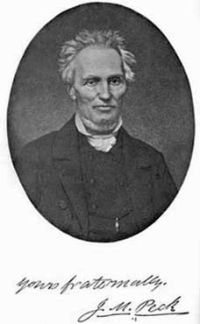
Portrait of John Mason Peck John Mason Peck,  A New Guide for Emigrants to the West

“ Government.—The Constitution of Illinois was formed by a convention held at Kaskaskia, in August, 1818. It provides for the distribution of the powers of government into three distinct departments,—the legislative, executive, and judiciary. The legislative authority is vested in a general assembly, consisting of a senate and house of representatives. Elections are held biennially, as are the ordinary sessions of the legislature. Senators are elected for four years.
The executive power is vested in the governor, who is chosen every fourth year, by the electors for representatives
”
Source: Gutenberg

Get perspective with Kwize: daily news enlightened by great literature