James Dunmore

Definition and stakes

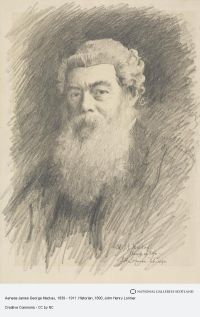
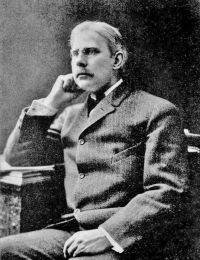
Portrait of Leslie Stephen Leslie Stephen,  Dictionary of National Biography… (1894)

“ On 6 Aug. 1686 he was created by James II Earl of Dunmore, Viscount Fincastle, and Lord Murray of Blair, Moulin, and Tillemot. At the revolution he was deprived of all his offices. According to the Earl of Balcarres, the supporters of King James at the revolution depended chiefly on Lord Dunmore to influence his father, the Marquis of Atholl, against the convention (Balcarres, Memoirs, p. 35) ; and he states that Dunmore 'used all endeavours to keep him to his duty,' and also to further the cause of King James (ib.) ”
Source: Wikisource

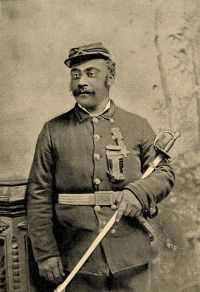
Portrait of Benson John Lossing Benson John Lossing,  The Pictorial Field-Book of the Revolution…

“ Dunmore replied that he had done the people of Norfolk good service by depriving them of the means of having their minds poisoned by rebellious doctrines, and intimated that cowardice alone prevented their interfering when the types were carried to the fleet. Holt went to Williamsburg, where he had formerly resided and held the office of mayor, and published a severe article against Dunmore. He then went to New York, where, ten years before, he had published the New York Gazette and Post Boy, in company with James Parker, and established a newspaper. ”
Source: Gutenberg

Edward Almack,  The History of the 2nd Dragoons…

“ He gave constant support to the Union with England. In 1707 he was appointed governor of Blackness Castle. He died in 1710. By his wife Catherine, daughter of Richard Watts, of Hereford, Dunmore had six sons and three daughters:—James, viscount of Fincastle, who [Pg 228] died unmarried in 1706; John, third earl of Dunmore; William, third earl; Robert, brigadier-general; Thomas, lieutenant-general; Charles; Henriet, married to Patrick, third Lord Kinnaird; Anne, to John, fourth earl of Dundonald; and Catherine, to her cousin John, third Lord Nairn. ”
Source: Gutenberg

Get perspective with Kwize: daily news enlightened by great literature