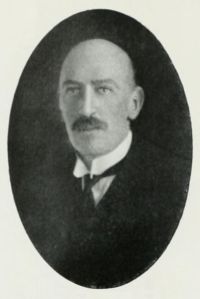
Johan van Oldenbarnevelt

Definition and stakes

Various Encyclopaedia Britannica, 11th Edition…

The advocate (or grand pensionary) of Holland therefore, if an able man, had opportunities for exercising a very considerable influence, becoming in fact a kind of minister of all affairs. It was this influence as exerted by the successive advocates of Holland, Paul Buys and Johan van Oldenbarneveldt, which rendered abortive the well-meant efforts of the earl of Leicester to centralize the government of the United Provinces. After his departure (1587) the advocate of Holland, Oldenbarneveldt, became the indispensable statesman of the struggling republic.
Source: Gutenberg

Blair Jaekel Windmills and Wooden Shoes

Jan van Oldenbarnevelt, was put to death on a scaffold erected in the Binnenhof “for having conspired to dismember the States of the Netherlands, and greatly troubled God’s church,” according to Maurice of Orange, whose displeasure he had incurred. The learned Grotius, scholar and statesman and the then senator from Rotterdam, who was arrested at the same time as Oldenbarnevelt for alleged conspiracy with him, was sentenced to prison for life in the castle of Loevenstein, near Gorinchem.
Source: Gutenberg

George Edmundson History of Holland

Those three personalities were John van Oldenbarneveldt, Maurice of Nassau and his cousin William Lewis of Nassau, the Stadholder of Friesland. Born in 1547, Oldenbarneveldt, after studying Jurisprudence at Louvain, Bourges and Heidelberg, became a devoted adherent of William the Silent and took part in the defence of Haarlem and of Leyden. His abilities, however, fitted him to take a prominent part as a politician and administrator rather than as a soldier; and his career may be said to have begun by his appointment to the post of Pensionary of Rotterdam in 1576.
Source: Gutenberg

Get perspective with Kwize: daily news enlightened by great literature