José María de Hidalgo

Definition and stakes

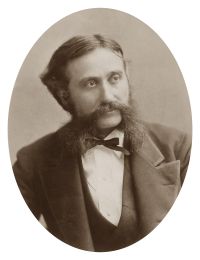
Portrait of Hubert Howe Bancroft Hubert Howe Bancroft,  History of Mexico (1885)

“ There was at this time one man only who stood forth conspicuous among the revolutionists as an admitted chief, a leader round whom they might with some degree of confidence rally, a fit successor of Hidalgo; and somewhat strange to say, this new man was the friend and disciple of Hidalgo, like him an ecclesiastic, and like him a devoted lover of his country. His name was José María Morelos y Pavon. ”
Source: Wikisource

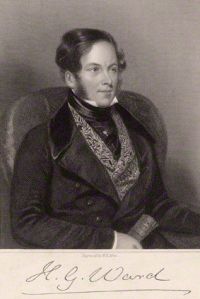
Portrait of Henry George Ward Henry George Ward,  Mexico in 1827/Volume 1 (1828)

“ His army had increased so enormously on the march, and during his stay at Guănăjūātŏ, that it consisted of nearly fifty thousand men. Hĭdālgŏ made some valuable additions to this force at Văllădŏlīd, where he was joined by the regiment of Provincial militia, and the dragoons of Mīchŏăcān, [6] both, armed, and well equipped: but a greater acquisition still was Don José Maria Mŏrēlŏs, Cura of Nŭcŭpētărŏ, an old college friend of Hidalgo, and one, of whose talents he was so well aware, that he immediately gave him a commission to command in chief on the whole South-Western line of coast. ”
Source: Wikisource

Portrait of Hubert Howe Bancroft Hubert Howe Bancroft,  History of Mexico (1885)

“ These troops were armed only with lances, an attempt made to convert quicksilver flasks into hand-mortars having failed. Hidalgo also endeavored, with but partial success, not only to cast cannon, but to fabricate them of wood, both kinds proving unserviceable. Numerous were the military appointments made by revolutionary leaders, among which may be mentioned that of José María Liceaga as lieutenant-colonel of the last-named regiment, [20] who played a prominent part during the course of the revolution. ”
Source: Wikisource

Get perspective with Kwize: daily news enlightened by great literature