José María Morelos

Definition and stakes

Portrait of Hubert Howe Bancroft Hubert Howe Bancroft History of Mexico (1885)

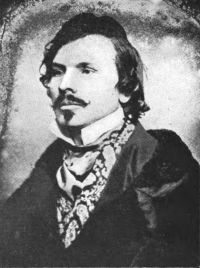
There was at this time one man only who stood forth conspicuous among the revolutionists as an admitted chief, a leader round whom they might with some degree of confidence rally, a fit successor of Hidalgo; and somewhat strange to say, this new man was the friend and disciple of Hidalgo, like him an ecclesiastic, and like him a devoted lover of his country. His name was José María Morelos y Pavon.
Source: Wikisource

Portrait of Hubert Howe Bancroft Hubert Howe Bancroft History of Mexico (1885)

Morelos wrote another severe batch of letters, as late as Oct. 25th, insisting on his conformance, and threatening, though other wise polite enough, to issue direct orders to subordinate leaders in Michoacan and elsewhere. The correspondence may be consulted in Hernandez y Dávalos, Col. Doc., v. 99, 161, et seq.; Negrete, Mex. Siglo XIX., v. 367, etc.; Alaman, Hist. Méj., iii. ap. 10. Rayon set out from Tancítaro on October 7, 1813, arriving at Chilpancingo on November 2d, accompanied by his family and brothers Ramon and José María, as described in his Diario, 648-9.
Source: Wikisource

Portrait of Hubert Howe Bancroft Hubert Howe Bancroft History of Mexico (1885)

His parents were honest and respectable people, the father, Manuel Morelos, being a carpenter, and the mother, Juana Pavon, the daughter of a school-master in Valladolid. José's education was the most elementary, and on the death of his father, his widowed mother was in so straitened circumstances that she gave the care of her son to his uncle Felipe Morelos, who owned a mule train, and trafficked between Mexico and Acapulco. The young man sometimes followed the train, and sometimes looked after the stock on the rancho
Source: Wikisource

Get perspective with Kwize: daily news enlightened by great literature