“ The State of Oaxaca—and part of the adjoining State of Guerrero—is remarkable for the numerous ruins of prehistoric inhabitants scattered upon its ridges and mountain crests. Terraces, pyramids, and walls crown the summits and extend down the slopes, actually clashing in some cases with the natural profiles of the hills, and causing the natural and artificial to mingle in a strange, and at first glance, scarcely distinguishable blend. ”
Oaxaca
Definition and stakes
Oaxaca, a Mexican state celebrated for its rugged terrain and profound cultural legacy, has long fascinated writers with its combination of natural splendor and historical depth. Authors such as C. Reginald Enock emphasized its ancient ruins and striking integration of the natural and the man-made, while Nevin O. Winter focused on its indigenous identity and the complexities of urban life.
Frederick Albion Ober and Gilbert Haven highlighted its agricultural abundance and strategic location, portraying it as a crucial center of Mexican life. References to figures like Porfirio Díaz and the region’s tenacious people, noted by Susan Hale, illustrate Oaxaca’s lasting importance as a cradle of both conflict and tradition. These diverse viewpoints collectively depict Oaxaca as a region where history, environment, and human effort converge in a unique manner.
Quotes about “Oaxaca”
Nevin O. Winter, Mexico and Her People of To-day
“ We find Oaxaca to be a city of about thirty-three thousand people of whom three-fourths or more are Indians. It is laid out with narrow streets, down the centre of which runs a stream of water, from which rise at times odours not the most agreeable. ”
Lewis Spence,
Mexico of the Mexicans
(1918)
“ Oaxaca is certainly one of the most wealthy mining districts of Mexico. Indeed, its celebrity in this respect Oaxaca. is world-wide. It has a population of about 1,000,000, and its scenery is probably unrivalled on the American continent. The Sierra Madre mountain range crosses the State, and the valleys which lie between its peaks are of surpassing beauty and fertility. The climate is sub-tropical and healthy, with a moderate rainfall, and agriculture is extensively engaged in. ”
William Henry Bishop, Mexico, California and Arizona (1900)
“ It relies, as a principal resource, upon the transport of the valuable productions of a rich tropical country, as cotton, sugar, coffee, rice, and the like. Oaxaca is an important small city of 28,000 people, birthplace of General Porfirio Diaz, the Mexican power behind the throne, and undoubtedly the weightiest person in the country. ”
Various, Blackwood's Edinburgh Magazine…
“ The heart seems to leap with delight, and the soul to be elevated, by the contemplation of those regions of fairy-like magnificence.The most celebrated among these favoured provinces is the valley of Oaxaca, in which two mountainous districts, the Mistecca and Tzapoteca, bear off the palm of beauty. It was through this immense valley, nearly three hundred leagues in length, and surrounded by the highest mountains in Mexico, that we were now journeying. ”
Frederick Albion Ober,
Travels in Mexico and life among the Mexicans
(1884)
“ From the hills immediately above the city of Oaxaca one looks down upon as fair a scene as he could wish,—upon smooth and verdant fields of cane and corn, dotted with white stone haciendas and with Indian hamlets springing up at the base of every hill. About the villages and the buildings of the sugar estates are trees, and across the valley of Tlacolula a line of giants stretches from hill to hill; but, except among the distant sierras, you cannot see any not planted by the hand of man; there are few natural groves or forests. ”
“ The city of Oaxaca is handsome and interesting, and enjoys a temperate climate due to its elevation of more than 5,000 feet above sea-level. It justly prides itself upon having produced some of Mexico's famous men, including Juarez and Porfirio Diaz. ”
Gilbert Haven,
Our Neighbor-Mexico
(1875)
“ This terrace is about three thousand feet above the sea. It seems to engirt the whole Mexican range. It extends from Monterey to Oaxaca. Pronounce this "Whahaca," and you will find it easier to handle than it looks. On this shelf, not quite half-way up to the level of the capital, is found the most fruitful section of the country. Here are perched along the eastern side of the country such towns as Monterey, Jalapa, Cordova, Orizaba, Cuernavaca, and Oaxaca. This is the best region for the production of the banana, orange, coffee, sugar, and other semi-tropical fruits. ”
Susan Hale,
The Story of Mexico
(1889)
“ The present generations of Oaxaca have the reputation of being the steady, independent mountaineers of Mexico; like the Swiss, always ready to defend their rights. Among them, Porfirio Diaz has been involved in every contest for his view of the right, since he was old enough to bear arms. ”
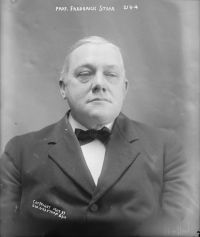
Frederick Starr,
In Indian Mexico (1908)
“ Our plan of journey for the year was first to make an expedition from Oaxaca to the north-west, into the Mixteca Alta; returning to Oaxaca, to strike eastward by way of Mitla, and the land of the Mixes, to Tehuantepec, from which place we should make a brief trip to the Juaves; returning to Tehuantepec, we should take the high road, by way of San Carlos, back to Oaxaca. Our first duty in the city of Oaxaca was to procure letters and orders from the governor. No governor in Mexico more completely realizes his importance and dignity than Governor Gonzales of Oaxaca. ”
Alfred Ronald Conkling, Appleton's Guide to Mexico (1884)
“ The region traversed by the southern division of the main line of this railway lies mostly in the States of Vera Cruz, Oaxaca and Chiapas. It is very rich in mineral deposits and in agricultural products. The climate is salubrious, and the vegetation is luxuriant along the greater part of the route. The State of Oaxaca contains valuable mines of gold, silver, iron, copper, and mercury. The cereals, brown beans, and tobacco, are grown in abundance. ”
Thomas A. Janvier,
Legends of the City of Mexico
“ What is most wonderful about this Wailing Woman, Señor, is that she is seen in the same moment by different people in places widely apart: one seeing her hurrying across the atrium of the Cathedral; another beside the Arcos de San Cosme; and yet another near the Salto del Agua, over by the prison of Belen. More than that, in one single night she will be seen in Monterey and in Oaxaca and in Acapulco—the whole width and length of the land apart—and whoever speaks with her in those far cities, as here in Mexico, immediately dies in fright. Also, she is seen at times in the country. ”
William Henry Bishop, Mexico, California and Arizona (1900)
“ From vast estates in Oaxaca, which with a commendable economy he has amassed meantime, the Mexican Warwick, controls the destinies of his country with an ease like moving one's little finger. He pleases himself in the interim to be governor, and commander of the forces, of this fighting state. In the absence of any efficient electoral system the country is under his absolute dictatorship ”
Susan Hale,
The Story of Mexico
(1889)
“ Wild animals, not only deer, but pumas and even the jaguar, roam over its slopes, covered with fan-palms and other tropical growths, while higher up is a forest of palms and oaks growing together. At the summit is a grand view of the valley of Oaxaca. The city, like Puebla, is of Spanish foundation, but at no very great distance from it are the ancient ruins of Mitla, still a puzzle to archæologists, since nothing certain is known even of the tribes found in that region by the Conquistadores,—the Zapotecas, or the traditions of their origin. ”
Nevin O. Winter, Mexico and Her People of To-day
“ After several exciting adventures on the way, General Diaz again appeared at Oaxaca among his friends and ardent supporters. His popularity and prestige in Oaxaca have always been remarkable. Never did he appeal to his neighbours and friends of that state in vain. It was [382] not long until he was at the head of an army of four thousand “Porfiristas”—men who would follow their leader to the death if need be, and many of whom had fought with him at Puebla and elsewhere. The news of the escape of Diaz brought gloom to the “Lerdistas.” Lerdo immediately marched his army southward. ”
William Hickling Prescott,
History of the Conquest of Mexico…
“ But, if the remains on the Mexican soil are so scanty, they multiply as we descend the southeastern slope of the Cordilleras, traverse the rich Valley of Oaxaca, and penetrate the forests of Chiapa and Yucatan. In the midst of these lonely regions we meet with the ruins, recently discovered, of several ancient cities, Mitla, Palenque, and Itzalana or Uxmal, [429] which argue a higher civilization{259} than anything yet found on the American continent ”
Nevin O. Winter, Mexico and Her People of To-day
“ The water supply is abundant, being brought in from the hills by an aqueduct. Fountains are located at numerous places, and a constant succession of Rebeccas with heads enveloped in their shawls, and carrying great earthen water-jars pass to and fro from them.Oaxaca contains many fine churches of which one, Santo Domingo, has been both monastery and fortress, and has just been restored at a cost of $13,000,000 (silver) so it is claimed, making it the most costly church in Mexico, if not in North America. ”
Frederick Albion Ober,
Travels in Mexico and life among the Mexicans
(1884)
“ The seat of this ancient bishopric is a triple vale, a trefoil in shape, with the capital city, Oaxaca, at the stem. From the north leads in the valley of Etla, with its broad river meandering through a billowy sea of corn-fields. This river turns south as it reaches the city and runs towards the Pacific, through the valley of Ejutla, while the third vale, known as Tlacolula, trends westward. Whichever way the eye may wander, the view is bounded by hills. ”
David Ames Wells,
A Study of Mexico
(1887)
“ The national and neighborhood highways do not merit the name. The principal road from Oaxaca to Costa Chica is a bridle-path, and in some parts of the district of Villa Alvarez it is so narrow that last year, when I, being sick, had to be carried on a bed to Oaxaca, the servants who carried me had to abandon it and cross through the woods, as two men abreast could not walk in it. If the national roads are thus, one can imagine what the neighborhood roads might be. ”
Emory Adams Allen, The Prehistoric World; Or, Vanished Races
“ The most celebrated ruin in Oaxaca is Mitla. These are the first ruins we have met that, by their strange architecture and peculiar ornamentation, suggest some different race as their builders. The present surroundings are of the gloomiest character. The country is barren and desert. The valley in which the ruins are located is high and narrow, but surrounded by bleak hills. The soil is dry and sandy, and almost devoid of vegetation. The cold winds, blowing almost constantly, sweep before them great clouds of sand. ”
Frederick Starr,
In Indian Mexico (1908)
“ Looking at the round huts of Chicahuastla, he shivered, and remarked: "Ah, sir, but it is cold in Chicahuastla." I replied, "Your Excellency, I see that you have been in Chicahuastla." When he saw the Zapotec types, from the District of Tehuantepec, he said: "They are fine large fellows; they make good soldiers; when I was Governor of Oaxaca, I had a body-guard of them." ”
Nevin O. Winter, Mexico and Her People of To-day
“ The poor Indians are forced to work for these landlords who claim title to the land formerly owned by their ancestors, or retire to the hills where, well up toward the crests, they cultivate their little fields of corn and beans. There is one tribe of Indians that dwell in the mountains of Oaxaca who have never acknowledged either Spanish or Mexican sovereignty, and maintain their own tribal form of government. They can be seen at Oaxaca on market days. ”
Lewis Spence,
Mexico of the Mexicans
(1918)
“ The Zapotecs and Mixtecs of Oaxaca are comparatively civilised people indeed, they have made greater progress in the arts of civilisation than any other of the native races, thanks, probably, to their own ancient culture. They furnish Mexico with numerous clerks and schoolmasters, and are in demand wherever patriotic and intelligent work is required. ”
Frederick Albion Ober,
Travels in Mexico and life among the Mexicans
(1884)
“ The ruins of former races may be traced throughout all Southern Mexico, through Oaxaca, Chiapas, Tabasco, and Yucatan, until they culminate in the latter State in the wonderful structures that are the amazement of the present generation ”
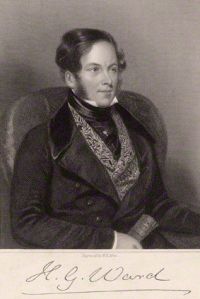
Henry George Ward,
Mexico in 1827/Volume 2
(1828)
“ Had I remained another year in Mexico, I should certainly have explored the whole territory of Oaxaca, and particularly the Mīstĕcă, where the cochineal is raised. The Indians employed in its cultivation are said to be a race much superior to the other tribes upon the Table-land. The women are called the Circassians of Mexico, and most of the families are affluent, above a million of dollars being annually employed in the Misteca in the purchase of cochineal. ”
Walter Lehmann, 1911 Encyclopædia Britannica, Volume 5… (1911)
“ On the other hand the Mayan culture evinces an evident tendency to assimilate heterogeneous elements, obliterating racial distinctions and imposing its own dominant character over a wide area. Oaxaca, the country of the Mixtecs and Zapotecs, became, as was natural from its geographical position midway between Yucatan and Mexico, the meeting-ground where two archaeological traditions which are sharply contrasted in their original homes united. Central American architecture is characterized by a fine feeling for construction, and the execution is at once bold and aesthetically effective. ”
Hanna More Johnson, About Mexico - Past and Present (1887)
“ He immediately set to work to educate his fellow-citizens up to the true idea of liberty. He built up the common schools, encouraged the Institute and urged upon the people the principle, untried before, of direct suffrage in the election of their governor. The grateful people of Oaxaca exercised their new privilege by electing Juarez as the first constitutional governor of their State, and soon after he was chosen chief-justice of the nation. ”
Thomas A. Joyce, Mexican archaeology
“ Any solution of this question must also fix the relation of Oaxaca to both, and account for the Huaxtec, a Maya-speaking people whose sculptures bear no trace of a hieroglyphic script. Included in this question is that of the origin of the calendar. Let me say at once [358] that the evidence at our disposal is not sufficient to permit these questions to be answered with certainty. Much patient excavation, both in the Mexican valley and in the central Mayan region, is necessary before the origin of the pre-Spanish civilization can be traced with any degree of finality ”
Edith O'Shaughnessy, Diplomatic Days
“ Oaxaca is in a state of complete revolution. Six thousand Indians have risen, and the whole country is seething with brigandage, flourishing greenly under the weak central rule. It will take years for things to settle down. On Sunday another picnic is being got up. The ambassador, of course, J. B. P., Mr. Butler, the Bonillas, Professor Baldwin, who is giving a course at the university here, Aliotti and Mr. Brown, president of the National Railways. I always take Elim for the dias de campo. He is quite a feature of the gatherings and good as gold, playing by himself. ”
Frederick Starr,
In Indian Mexico (1908)
“ Between Tehuacan and Oaxaca the railroad passes through a low, deep valley which is ever hot. Few people on the train pass through this valley without feeling its depressing influence. It would seem that travelers would hardly stop at stations within its limits, unless impelled by actual necessity. The most important of the towns in this valley is Cuicatlan. Little of it is to be seen from the railroad, but in reality it is a notably picturesque village.It is the cabecera of a district in which dwell three most interesting tribes—the Cuicatecs, Chinantecs, and Mazatecs. ”
Walter Lehmann, 1911 Encyclopædia Britannica, Volume 5… (1911)
“ A whole series of sites is included within the geographical limits of Chiapas, which from the archaeologist’s standpoint must be considered as belonging properly to Guatemala. The country has been quite insufficiently explored. Oaxaca (Mexico) .—The bulk of the population of the province of Oaxaca is composed of a distinct racial group, best represented by the Zapotecs, who have been for an unknown length of time the intermediaries between the Nahua civilization of Mexico on the west and the Mayan on the east. ”
Brantz Mayer, Mexico, Aztec, Spanish and Republican (1852)
“ In Oaxaca, Guadalaxara, Valladolid, Puebla, Cuautitlan, San Juan Teotihuacan, Zempoala, Metepec, Ixtlahuaca, Tulancingo, the number of looms increased rapidly between 1796 and 1800. In Oaxaca thirty were added; in San Juan Teotihuacan thirty-three; in Queretaro, three thousand four hundred persons were employed; while, in the town of Cadereita, there existed more than two hundred looms, giving employment to more than five hundred individuals. ”
Justin Harvey Smith, The War with Mexico/Volume 2 (1919)
“ In February, 1847, a revolutionary government satisfactory to the people was set up in Oaxaca state, and this supported the national cause to the full extent of its ability. A factional combination made up in Congress, however, took the side (May 8) of the deposed authorities. This action naturally caused great dissatisfaction in Oaxaca (76exposición de la cong. de Oaxaca, June 26) , and it was particularly imprudent because Gen. Antonio de León and his officers were partisans of the revolutionary party (Ramirez, México, 255) . ”